
A courtyard villa works best when the courtyard serves daily rooms, not only the elevation
Courtyard villa design ideas should start with one practical question: which rooms will become better because of the courtyard?
A courtyard villa combines modern living with natural comfort by placing an open courtyard at the center of the home. This design improves privacy while allowing sunlight and fresh air to reach multiple rooms throughout the day. Courtyards help reduce dependence on artificial lighting, improve cross-ventilation, and create a peaceful indoor-outdoor connection for everyday family living.
But a courtyard can also become a heat pocket, rain trap, mosquito zone, or wasted void if it is added only for style. The best courtyard is a useful room without a roof.
Why Courtyard Villa Design Matters in KERALA Homes
In warm-humid homes, privacy walls and airflow paths must be planned together.
In many Indian and Kerala-style villas, families want three things at the same time: privacy from neighbors, bright interiors, and cooler rooms. The problem is that these needs often clash.
High compound walls protect privacy, but they can block the breeze. Large glass windows bring light, but they can expose family spaces. Closed elevations feel secure, but they can make the center of the house dark.
This is where the courtyard becomes useful. It lets the villa open inward instead of outward. The home can have a quieter street face and a brighter inner life.
A courtyard placed near the center can pull light into the plan, move warm air upward, create a private view, and connect family rooms.
Myth vs Fact
Myth | Fact |
Courtyards are only for luxury villas. | Small courts and light wells can work in compact homes too. |
More glass means better daylight. | Too much glass can add heat and glare. |
Privacy means fewer openings. | Inward-facing openings can improve privacy and airflow. |
Plants alone cool a courtyard. | Shade, airflow, drainage, and materials also matter. |
The Main Idea: Place the Courtyard Where Life Happens
The best courtyard position is the one that improves at least three daily-use spaces.
The best courtyard villa design places the courtyard where it helps the rooms a family actually uses: dining, family lounge, stair landing, pooja space, kitchen edge, or bedroom passage.
A courtyard villa combines modern living with natural comfort by placing an open courtyard at the center of the home. But “center” does not always mean the exact middle of the plot. It means the functional heart of the plan.
A strong courtyard should do five jobs:
Courtyard Job | Why It Matters |
Privacy | Rooms can open inward instead of toward the road. |
Daylight | Dark internal rooms become brighter during the day. |
Ventilation | Fresh air can move through the home more easily. |
Cooling feel | Shade, plants, and airflow make the home feel calmer. |
Family use | The court becomes part of daily life, not just decoration. |
Unpopular truth:
A courtyard that only improves the guest living room is often a showpiece. A courtyard that improves dining, stairs, family lounge, and bedroom passage becomes part of everyday living.
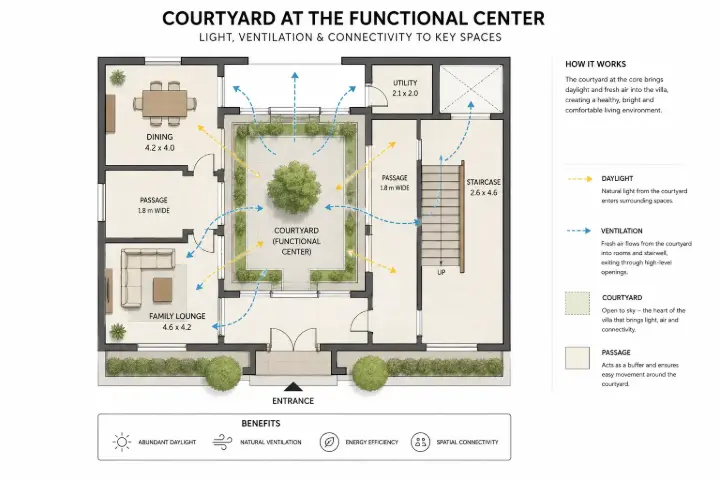
Central Courtyard for Family Privacy
A central courtyard helps the home open inward while keeping family spaces more private.
A central courtyard is the most classic option. It places the open space inside the home so rooms can face inward. This works well for villas on busy roads or plots with close neighbors.
Best rooms around a central courtyard include the dining area, family lounge, staircase, pooja room, internal passage, and parents’ sitting area.
The main benefit is privacy. Instead of opening large windows toward the road or neighboring homes, the villa opens into its own protected inner space.
Trade-off:
A central courtyard can increase passage area. To avoid this, plan the furniture before finalizing the court size.
Side Courtyard for Narrow Plots
A side courtyard can bring light into narrow villas without exposing the whole home
A side courtyard works well when the plot is narrow or when one side has better privacy. It can serve bedrooms, bathrooms, kitchens, or a study zone.
This is useful when the front elevation must stay formal and the rear is already used for service space.
A side court does not need to be large. Even a slim court can bring light into a dark passage or bathroom row if it is placed correctly.
Design tip:
Use a taller side wall, slim planting, and high windows. This keeps privacy while still allowing light
Courtyard Dining for Daily Family Value
A dining courtyard often gives more daily value than a front-facing show courtyard
A courtyard beside the dining area is one of the most practical choices. Families use dining spaces every day, so the court is seen often.
It can hold indoor plants, a small water bowl, a sculpture, a shaded seating ledge, a textured feature wall, or a small tree if drainage and root space allow.
In Kerala-style homes, the dining area often becomes the real family gathering space, not the formal living room. A courtyard here feels useful, not decorative.
Trade-off:
A dining courtyard needs privacy from staff movement, kitchen utility areas, and guest entry paths. Otherwise, the family may keep curtains closed.
Stair Courtyard for Light and Air Movement
A stair courtyard can turn a dark central staircase into a brighter air path.
Many villas have dark staircases because stairs sit in the center of the plan. Pairing the stair with a courtyard or light well can bring daylight into both floors.
A high opening above the stair can also help warm air move upward. This is useful because warm air naturally rises. When upper openings are planned well, the courtyard can help release trapped heat.
Trade-off:
Do not depend only on the stair void for ventilation. Bedrooms, kitchens, and toilets still need proper openable windows or exhaust planning.
Bedroom Courtyard With Privacy Layers
Bedroom courtyards need screens, planting, and controlled openings to stay truly private
A bedroom opening into a courtyard can feel calm and private, but only when sightlines are controlled.
Avoid placing the bed directly opposite a clear glass wall if guests, staff, or other family members pass through the courtyard.
Better options include high sill windows, sliding jaali screens, vertical fins, planter buffers, frosted lower glass, curtain pockets, and angled openings.
Unpopular truth:
A bedroom courtyard without privacy layering becomes a curtain-closed wall. That defeats the purpose of the courtyard.
Kitchen Courtyard for Light and Service Use
A kitchen courtyard can improve daylight, but it should not replace planned exhaust.
A small kitchen court can bring light into the kitchen, utility, wash area, or breakfast counter. But it should not be treated as the only smoke solution.
Plan for a chimney or exhaust fan, washable wall finish, drainage, anti-slip floor, mosquito control, a covered utility edge, and easy cleaning access.
Trade-off:
A kitchen courtyard can improve light and mood, but smoke, smell, and moisture still need planned exhaust.
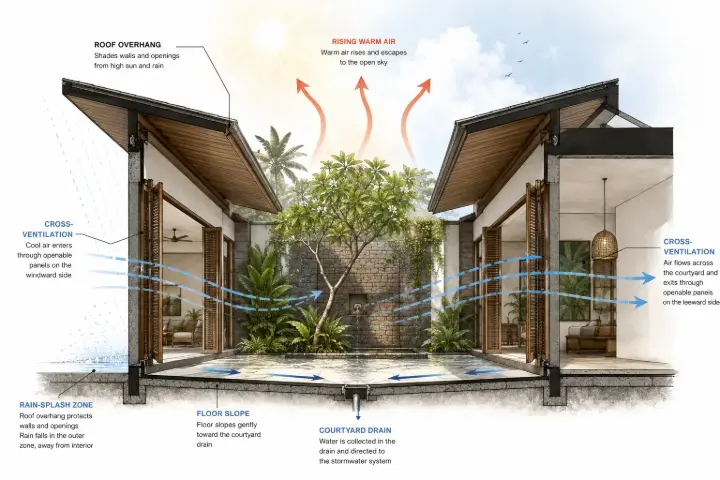
Open-to-Sky Courtyard for Light and Warm Air Release
Open-to-sky courtyards bring strong daylight but need proper rain and drainage planning.
Open-to-sky courts feel natural and bright. They also help warm air move upward when upper openings are planned.
But in monsoon regions, rain behavior matters. Before choosing flooring, plan the floor slope, main drain, overflow route, roof drip line, splash zone, plant soil control, and cleaning access.
Trade-off:
An open-to-sky gives a stronger outdoor feeling. Semi-covered courts are easier to use during heavy rain.
Common Mistakes in Courtyard Villa Design
A courtyard fails when it is designed for photos before privacy, climate, and maintenance.
Mistake 1: The courtyard touches the wrong rooms
If the court only serves a rarely used formal living room, it may not improve daily comfort. Place it near rooms used morning, noon, and evening.
Mistake 2: Too much west-facing glass
West-facing glass can bring harsh afternoon heat. Use shading, deeper overhangs, screens, or controlled openings.
Mistake 3: No privacy map
Before finalizing the layout, mark every view from the road, neighboring terrace, upper windows, and service areas. A beautiful glass court is not useful if the family keeps it covered all day.
Mistake 4: No rain-splash line
In open courts, rain does not fall neatly in the center. Wind pushes it sideways. Mark the splash zone before placing wooden doors, soft furniture, or indoor rugs.
Mistake 5: No mosquito and algae plan
A shaded wet court can become difficult to maintain. Avoid standing water, choose washable finishes, and plan regular cleaning access.
Mistake 6: Fixed glass only
Fixed glass brings view, but not airflow. For ventilation, at least some panels must open safely.
R+A Client Field Note
The most useful courtyard is often smaller, better placed, and connected to daily routines.
In one R+A client concept, the first instinct was to place the courtyard near the formal living room because it looked impressive from the entrance.
But during plan review, the better option was a more private courtyard beside the dining area and stair landing.
That one change made the plan feel more lived-in.
The dining area received a green view during daily meals. The stair landing no longer felt dark. The family lounge got borrowed light without opening directly to the road. The formal living room stayed private for guests, while the family spaces gained comfort.
Design observation:
The winning courtyard was not the biggest one. It was the one that touched the most-used spaces.
Field note for tropical homes:
In warm-humid regions, families often close curtains during the day for privacy. A good courtyard reduces that habit by giving rooms an inward-facing view.
Courtyard Villa Planning Checklist
A courtyard should pass privacy, light, air, rain, and maintenance checks before final design
A courtyard should pass five simple tests before it becomes part of the final villa plan.
Test | What to Check |
Daily-use test | Does it improve rooms used every day? |
Privacy test | Can outsiders see private activities? |
Light test | Does it reduce dark internal zones? |
Air test | Can air enter and exit? |
Rain test | Is water safely drained? |
Maintenance test | Can it be cleaned easily? |
Checklist 1: Before Finalizing the Plan
Do this now:
- Step 1: Mark the family’s top five daily-use spaces.
- Step 2: Place the courtyard near at least three of them.
- Step 3: Draw view lines from the road, neighbors, terrace, and gate.
- Step 4: Mark morning, noon, and afternoon sun direction.
- Step 5: Decide which panels open and which stay fixed.
Proof you keep: Privacy sketch, sun-path note, room-use map, and plan revision date.
Checklist 2: Before Choosing Materials
Do this now:
- Step 1: Mark the rain-splash zone.
- Step 2: Choose anti-slip flooring.
- Step 3: Add washable wall finish near plants and water points.
- Step 4: Confirm drain and overflow position.
- Step 5: Decide mosquito control before planting.
Proof you keep: Material board, drainage detail, finish schedule, and site approval date.
Simple Homeowner Field Test
A three-time site visit can reveal light, heat, and privacy issues before construction.
Before construction, visit the site three times.
Time | What to Check |
9 a.m. | Morning light and privacy |
1 p.m. | Heat and glare |
4 p.m. | Harsh sun and neighbor views |
Stand where the courtyard is planned. Look toward every room opening. If a bedroom, dining table, or family sofa feels exposed, fix the layout before elevation design begins.
Also check where rainwater may move during a monsoon. This is especially important if the courtyard is open to the sky.
FAQs
Courtyard villas are practical when the courtyard has a clear job in the plan.
1. Is a courtyard villa suitable for small plots?
Yes. The courtyard may need to become a pocket court or light well instead of a large garden court. The goal is not size. The goal is to bring light and air to rooms that would otherwise feel closed.
2. Does a courtyard make the house hotter?
It can, if there is too much unshaded glass, dark flooring, or poor airflow. Use shade, openable panels, light-colored finishes, and planting.
3. Can a courtyard improve privacy?
Yes. A courtyard lets larger openings face inward instead of toward the road or neighboring homes. For better privacy, use screens, high-sill windows, planting, angled openings, and controlled external windows.
4. Should the courtyard be open to the sky or covered?
Open-to-sky courts bring better daylight and a stronger outdoor feeling. Covered or semi-covered courts are easier during heavy rain. In monsoon regions, a pergola, glass canopy, or partial roof edge may make the space easier to use daily.
5. Which rooms should face the courtyard?
Dining, family lounge, stair landing, pooja space, and internal passages are usually the best choices. Bedrooms can also face the courtyard, but they need stronger privacy layers.
Conclusion
A good courtyard villa feels private, bright, airy, and easy to live in every day.
A courtyard villa is not just about adding an open space inside the house. It is about designing a better way for the home to breathe, receive light, and protect family privacy.
The best courtyard villa design ideas are not always the most dramatic ones. Often, the strongest idea is simple: place the courtyard where the family uses the home most.
A dining courtyard can make daily meals calmer. A starry courtyard can brighten the center of the house. A bedroom courtyard can create a private garden view. A kitchen court can improve light and service use. A central court can help the home open inward instead of outward.
For Indian and Kerala-style villas, the courtyard should be planned with privacy, daylight, ventilation, monsoon rain, insects, and maintenance in mind. When these details are handled early, the courtyard becomes more than a design feature. It becomes the quiet center of everyday family life.
About the Author
Mohammed Rashid
Founder & Principal Architect, R+A Architects
Mohammed Rashid, Founder & Principal Architect at R+A Architects, holds a B.Arch from Anna University. With 60+ projects across India, Dubai, and Europe, and awards including India Design 2023 and Stellar Design 2024, he champions modern Kerala architecture rooted in climate, comfort, and culture.
Related Reading
- Architectural Services in Perinthalmanna, Kerala
- Architecture & Design Insights for Kerala Homes & Businesses
Explore next:
- How a Good Architect Can Simplify the Complexities of Building Permits
- Cost of Building a House in Kerala (2026 Updated)
- Build Your Luxury NRI Villa in Kerala with Complete Design + PMC Support
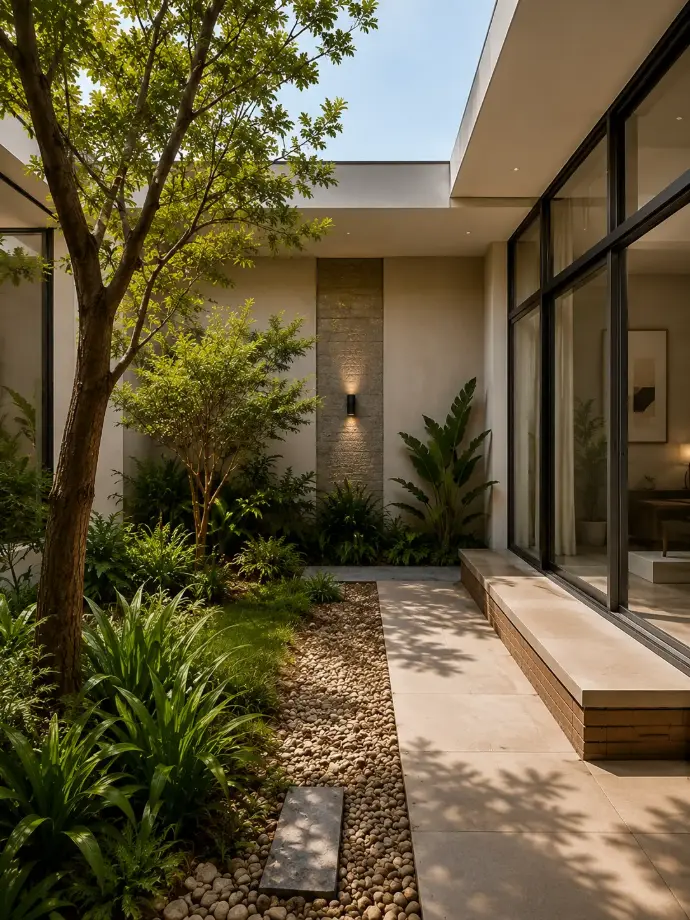
Plan Your Courtyard the Right Way
Plan the courtyard before the elevation, not after the floor plan is fixed.
Start with a courtyard study before finalizing the layout. For homeowners planning a private, light-filled courtyard villa in Malappuram, working with experienced architects in Perinthalmanna can help you plan the courtyard, room layout, ventilation, and privacy details before construction starts.
Map your family’s daily-use rooms, privacy risks, sun direction, and rain-splash zones first. Then decide whether your home needs a central courtyard, dining courtyard, side court, stair court, or open-to-sky court.