
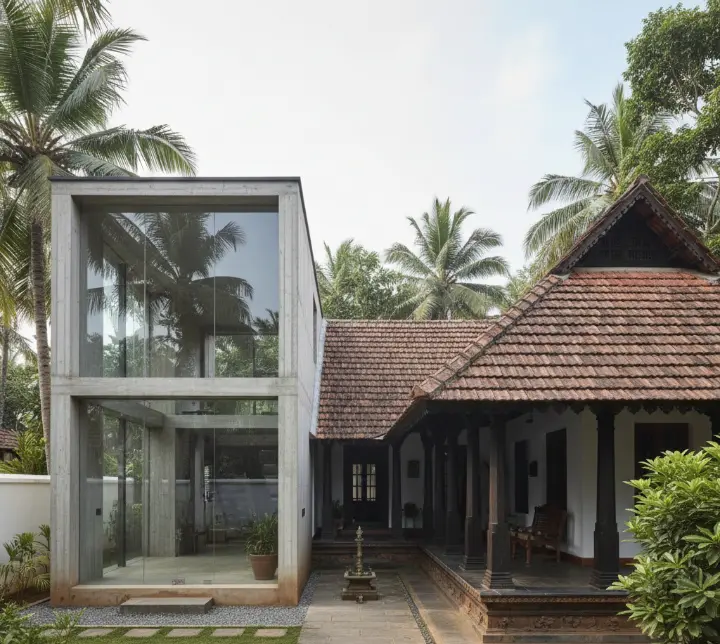
Fusion of traditional & modern elements in Kerala homes is becoming a key consideration early in the design process as families, NRIs, and developers search for homes that feel rooted yet global. By blending cultural memory with clean contemporary planning, Kerala homes can stay climate-responsive, emotionally meaningful, and future-ready.
R+A frames fusion not as mixing opposites but as a conversation between the past and the present, ensuring that neither dominates. This article explains exactly how to do that—with Kerala’s climate, materials, and lifestyle at the center.
CONTEXT & WHY IT MATTERS
In Kerala, climate and cultural memory make early design fusion essential.
Kerala Homeowners & Families
Most families want homes that feel “Kerala” without feeling old-fashioned. Fusion helps maintain identity while offering the openness and simplicity modern living demands.
NRIs from UK, Europe & GCC
Building from abroad adds stress. Fusion gives NRIs a sense of connection to home while using modern forms, tech, and layouts they’re used to internationally.
Developers & Business Owners
Timeless design increases property value. Luxury villas and resorts in Kerala stand out when they feel culturally rooted yet visually refined.
R+A bases every project on:
- Respecting Cultural Memory
- Climate-Responsive Thinking First
- Material Integrity
- Function-Led Planning
- Visual Balance
Adding traditional details at the end fails. Fusion must start at concept stage.
Kerala’s traditional systems—sloped roofs, verandas, courtyards—exist because of humidity, sun path, and monsoons. Modern design adds function, openness, and lifestyle comfort.
Fusion works when:
- Traditional elements solve climate & comfort
- Modern elements solve function & clarity
How R+A Executes Fusion
- Use sloped roofs + overhangs to cool interiors
- Use modern frames + glass where shaded
- Reinterpret—not copy—woodwork
- Add courtyards or light wells based on airflow
- Maintain a simple material palette for balance
Too much glass increases heat. Too much wood increases maintenance.
Which Traditional Kerala Elements Still Matter?
Traditional elements should solve functional or climate problems—not be tokens.
Core Kerala elements worth keeping:
- Sloped/tiled roofs for cooling
- Verandas for shading
- Courtyards for air movement
- Timber for warmth
- Laterite for local character
Malappuram & Palakkad’s harsh summers make deep verandas extremely effective.
Which Modern Elements Fit Kerala Homes?
Modern elements should improve usability, not overpower tradition.
Works well:
- Large, shaded openings
- Minimal joinery
- Open-plan living
- Smart home systems
- Hybrid metal-wood details
Most “modern villas” fail because glass is added without shading.
How to Balance Materials for a Timeless Look?
Pair one natural material with one modern material for visual stability.
Effective Pairings
- Laterite + exposed concrete
- Timber + matte metal
- Clay tiles + white textured plaster
Material Performance Table
Item | Value (unit) | Date |
Recommended SHGC for Kerala glass | ≤ 0.32 | 2024 |
Ideal overhang | 0.9–1.5 m | 2024 |
Passive cooling comfort band | 26–28°C | 2024 |
Natural materials look beautiful but require skilled workers
How NRIs Can Ensure Fusion Is Executed Correctly
NRI clients need a documented fusion brief before design begins.
Kochi vs Kozhikode have different monsoon behaviors → shading design changes.
Risks in Fusion Design
Fusion fails when traditional elements become props or decoration.
Avoid:
- Too many competing materials
- Glass without thermal control
- Courtyards without drainage
- Timber without treatment
Most expensive mistakes come from adding “heritage corners” late in the project.
COMMON MISTAKES & RED FLAGS
Fusion mistakes happen when design decisions are made at finishing stage.
Watch for:
- Traditional patterns added just for looks
- Courtyards placed in heat traps
- Flat roofs without insulation
- Imported materials reacting badly to humidity
Mapping cultural memory and daily routine early leads to successful fusion.
NRI Family, Thrissur
- Courtyard turned into modern light well
- Sloped roof paired with flat rear slab
- Hybrid engineered wood for humidity stability
- Veranda reduced indoor heat by ~4°C (example; verify)
Showroom lighting hides how materials look in Kerala humidity.
FAQs
1. Does fusion increase cost?
Only if you use premium natural materials. Modern planning can actually reduce long-term cooling costs.
2. Can multiple styles be combined?
Yes—if unified by a controlled material palette.
3. Is a courtyard mandatory?
No. A light well or double-height void can achieve similar airflow.
4. What materials last longest in Kerala?
Laterite, stone, treated timber, coated metal, engineered wood.
5. How do NRIs monitor progress?
Weekly updates, shared dashboards, and a documented fusion brief ensure clarity.
Related Reading
- Architectural Services in Perinthalmanna, Kerala
- Architecture & Design Insights for Kerala Homes & Businesses
Explore next:
- Why Framed Homes Define Modern Construction in Kerala
- Modern Architecture Design Trends in Kerala
- The Role of an Architect in a Kerala Home Construction Project
Author Bio
Mohammed Rashid
Founder & Principal Architect, R+A Architects
- B.Arch, Anna University
- 60+ residential and commercial projects across India, Dubai, and Europe
- Awards: India Design 2023, Stellar Design 2024
- Core focus: climate-responsive modern Kerala architecture rooted in comfort and culture
- Special interest in helping NRIs build in Kerala with clear, remote-friendly processes
- Design belief: “A home must respect climate, reflect who you are, and still feel peaceful after ten years.”