
When someone in Kerala decides to build a house, it usually starts with excitement. People think about design, size, style, and how beautiful the final home will look. But after a few years of living in it, a very different reality starts to appear.
The weather in Kerala is not easy on buildings. Heavy monsoon rains stay for months, humidity is almost constant throughout the year, and heat during summer makes things even more challenging. On top of that, termites and moisture slowly affect materials over time.
Because of this, many families are now thinking beyond just beauty. They want homes that are easy to maintain, do not require constant repairs, and can handle Kerala’s climate naturally. This is where low maintenance house design ideas for Kerala families become very important.
In Kerala, maintenance cost becomes a long-term burden mainly due to poor climate-based planning during construction.
Kerala Climate and Its Hidden Impact on Homes
Kerala’s climate looks peaceful from outside, but for buildings, it is quite demanding. The biggest challenge is not just rain — it is moisture that stays in the air for long periods.
During monsoon, rainwater continuously hits walls, roofs, and outdoor surfaces. Even after rain stops, humidity stays trapped in the environment. This means materials rarely get a chance to fully dry.
Over time, this leads to slow damage. Walls start showing damp patches, paint loses its finish, wooden parts begin to weaken, and sometimes mold develops in corners that do not get proper airflow.
What makes this worse is that these problems do not appear immediately. A house may look perfect for the first few years, but slowly maintenance issues begin to increase.
Most Kerala homes start showing climate-related wear between the 3rd and 5th year after construction.
Why Simple House Design Works Better in Kerala
One of the most important lessons in Kerala architecture is that simplicity performs better over time.
A house with too many design elements — curves, projections, multiple roof layers, and complex shapes — looks attractive at first. But from a practical point of view, every extra corner becomes a place where water can collect or seep in.
During heavy rain, water naturally flows along surfaces. If the design is too complicated, water flow becomes uneven, and certain areas remain wet longer than others. This slowly increases the chances of leakage and surface damage.
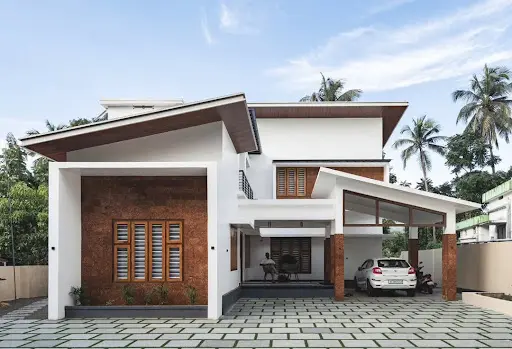
Simple house designs, on the other hand, allow water to flow smoothly. Walls are easier to maintain, roofs drain properly, and there are fewer weak points overall.
Simple architectural shapes reduce long-term leakage risks in high-rainfall regions like Kerala.
Materials That Decide How Much Maintenance You Will Need
Material selection is one of the most important parts of low maintenance design. In Kerala, this becomes even more critical because of constant moisture exposure.
Traditional materials like untreated wood look beautiful and give a natural feel, but they require regular care. Without proper treatment, wood can attract termites or start deteriorating in humid conditions.
Because of this, many modern homes are shifting toward more stable materials. Aluminium windows are now widely used because they do not rust or get damaged by moisture. UPVC frames are also popular because they are durable and easy to maintain. Similarly, vitrified tiles are preferred for flooring because they do not absorb water easily and are simple to clean.
Concrete structures also perform better in Kerala compared to mixed-material construction because they are less affected by humidity changes.
Material choice can reduce up to half of long-term maintenance effort in Kerala homes.
Design Table (Expanded View)
Design Area | Recommended Choice | Why It Matters in Kerala |
Roof Design | Sloped RCC or tiled roof | Prevents water stagnation during monsoon |
Flooring | Vitrified tiles | Resists moisture and easy cleaning |
Windows | Aluminium / UPVC | Avoids termite and rust issues |
Exterior Wall | Weatherproof paint | Reduces repaint cycles |
House Layout | Simple rectangular plan | Minimizes leakage points |
Rectangular layouts consistently perform better in Kerala’s monsoon conditions due to efficient water drainage.
Ventilation: The Silent Protector of Your Home
Ventilation is often ignored during construction because it does not seem very important at first. But over time, it becomes one of the most critical factors in home durability.
In traditional Kerala homes, airflow was naturally integrated into the design. Large windows, open courtyards, and elevated structures allowed air to move freely through the house. This kept interiors dry and reduced moisture buildup.
Modern homes, however, sometimes focus more on closed designs for air conditioning efficiency. While this improves comfort in some ways, it also traps moisture inside rooms if not properly planned.
When air does not circulate properly, moisture builds up in hidden areas. This leads to mold growth, wall damage, and sometimes even furniture decay.
Proper ventilation can significantly extend the lifespan of interior walls and reduce moisture-related repairs.
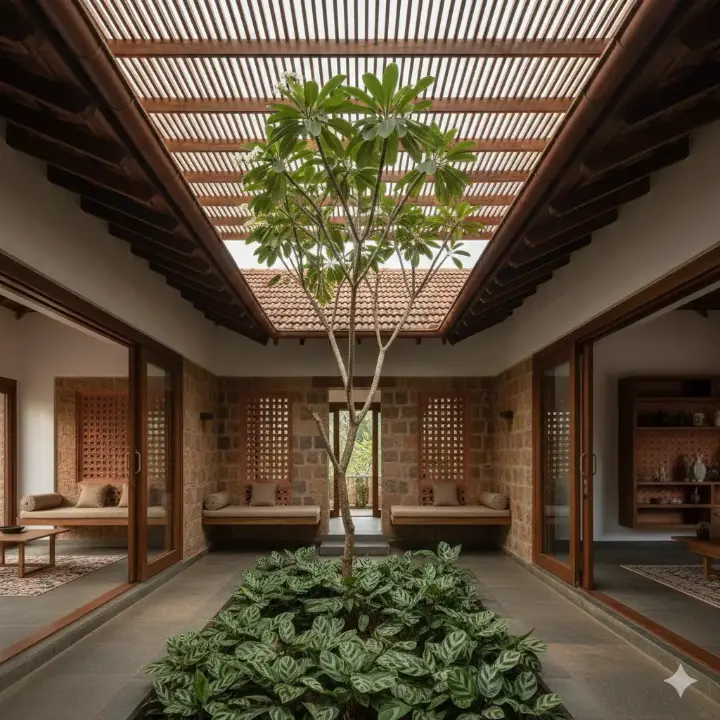
Interior Design and Daily Maintenance Reality
Inside the house, maintenance is more about daily habits and design decisions than construction itself.
Many homes become difficult to maintain because of complex interiors. Heavy furniture, tight corners, and decorative structures make cleaning harder. Dust collects in hidden areas, and over time, daily upkeep becomes tiring.
Simple interiors solve this problem naturally. Light-coloured walls reflect more light and feel cleaner. Built-in storage reduces clutter. Open layouts make movement and cleaning easier.
After living in such homes, most families realize that simplicity is not just a design choice — it is a lifestyle advantage.
Minimal interior design reduces daily cleaning effort and improves long-term comfort.
Small Construction Decisions That Have Big Impact
During construction, many decisions seem small but have long-term consequences.
For example, sloped roofs help water drain quickly during heavy rain, reducing the risk of leakage. Weather-resistant exterior paint helps walls maintain their condition for longer periods without frequent repainting. Proper drainage systems around the house prevent water from collecting near the foundation, which protects structural stability.
These decisions do not change how the house looks dramatically, but they determine how easy or difficult it will be to maintain in the future.
Drainage planning is one of the most undervalued but critical parts of Kerala home design.
Comparison Table: Low Maintenance vs Normal Homes
Feature | Low Maintenance House | Normal House |
Roof Type | Sloped rain-friendly design | Flat or complex roof |
Annual Maintenance Cost | ₹5,000 – ₹15,000 | ₹20,000 – ₹50,000 |
Material Choice | Aluminium, UPVC, vitrified | Wood-heavy mixed materials |
Moisture Resistance | High | Medium to low |
Cleaning Effort | Low | High |
Low maintenance homes can reduce yearly repair costs by up to 60% when designed properly.
FAQ
What is a low maintenance house in Kerala?
A low maintenance house is designed to reduce repair work and cleaning effort. It uses durable materials and simple design suited for Kerala’s climate.
Which roof is best for Kerala homes?
Sloped roofs are best because they allow rainwater to drain quickly. This helps prevent leakage during heavy monsoon seasons.
Are low maintenance houses expensive to build?
They may cost slightly more initially due to better materials. But they save more money in long-term maintenance.
Which materials are best for Kerala climate?
Vitrified tiles, aluminium windows, UPVC frames, and concrete structures work best. They resist moisture and last longer.
Do low maintenance homes need less cleaning?
Yes, because they are designed with simple layouts and easy-to-clean materials. This reduces daily cleaning effort.
How does ventilation affect maintenance?
Good ventilation reduces moisture buildup inside the house. This helps prevent mold, damp walls, and damage over time.
What is the biggest mistake in Kerala home design?
Ignoring climate factors like rain and humidity is the biggest mistake. It leads to higher maintenance costs later.
At the end of the day, building a low maintenance house in Kerala is not about luxury or expensive materials. It is about understanding the environment and designing accordingly.
A well-planned home naturally becomes easier to maintain. It stays stronger, cleaner, and more comfortable over the years without demanding constant attention.
The real success of a house is not just how it looks on the day it is completed, but how effortlessly it performs after many years of living.
Climate-aware design is the key to long-lasting and low maintenance homes in Kerala.
About the Author
Mohammed Rashid
Founder & Principal Architect, R+A Architects
Mohammed Rashid, Founder & Principal Architect at R+A Architects, holds a B.Arch from Anna University. With 60+ projects across India, Dubai, and Europe, and awards including India Design 2023 and Stellar Design 2024, he champions modern Kerala architecture rooted in climate, comfort, and culture.
Related Reading
- Architectural Services in Perinthalmanna, Kerala
- Architecture & Design Insights for Kerala Homes & Businesses
Explore next:
- How a Good Architect Can Simplify the Complexities of Building Permits
- Kerala Coastal Zone Management Authority.
- Build Your Luxury NRI Villa in Kerala with Complete Design + PMC Support