
In today’s world, noise has become normal.
Traffic, neighbours, construction, electronics, conversations, and constant alerts fill our days. Even inside homes, silence is becoming rare.
For many homeowners in Kerala, the biggest problem is no longer space or style—it is the lack of quiet.
This is why, in 2026 and beyond, silence is no longer accidental in good homes.
It is designed.
Among experienced architects in Kerala, silence is now treated as a core comfort feature—just like light, ventilation, or structure.
Why Silence Matters More Today Than Ever Before
Earlier, homes were naturally quieter:
- Less traffic
- Fewer devices
- Lower density living
Today, even residential areas are filled with:
- Road noise
- Neighbouring buildings
- TVs, phones, appliances
- Urban activity that never fully stops
As a result, people feel tired even when they are at home.
Silence is no longer about luxury.
It is about mental health, focus, rest, and quality of life.
Good architecture responds to this reality.
Silence Is Not the Absence of Sound — It Is Controlled Sound
A completely silent house is unrealistic.
What good architecture does is control sound, not eliminate it.
Architects think about:
- Where sound enters the house
- How it travels inside
- Where it should stop
- Where quiet is most needed
This is where thoughtful design separates ordinary homes from well-designed homes.
How Architects in Kerala Design for Silence
Experienced architects in Kerala understand that silence cannot be added later.
It must be planned from the beginning.
Below are the key architectural strategies used to create quiet homes.
1. Site Planning: The First Layer of Silence
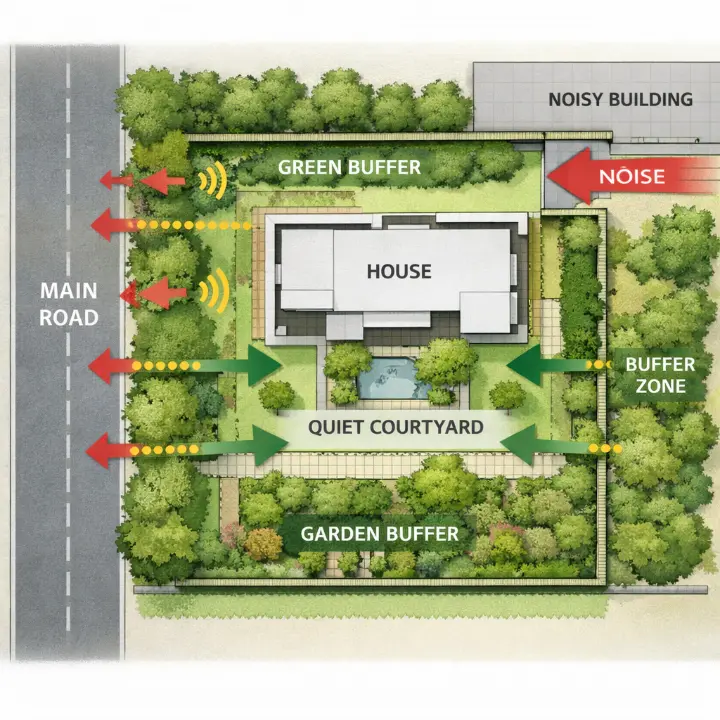
Silence begins even before the building starts.
Architects study:
- Road position
- Neighbouring plots
- Noise sources like schools, mosques, temples, highways
- Wind direction (sound travels with wind)
Design decisions include:
- Placing buildings away from noise sources
- Using setbacks intelligently
- Creating buffer zones like gardens or courtyards
2. Zoning the House Based on Noise Sensitivity
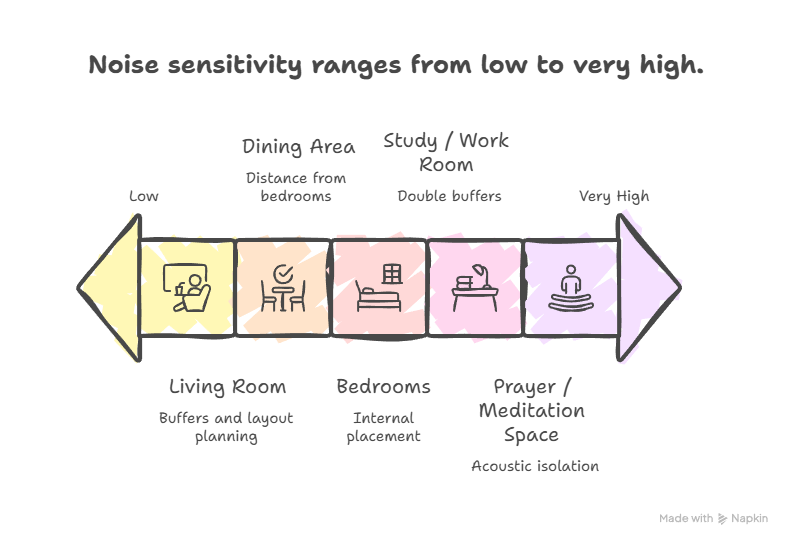
Not all rooms need the same level of quiet.
Architects divide the house into zones:
- Public zones (living, dining)
- Semi-private zones (family areas)
- Private zones (bedrooms, study, prayer rooms)
Quiet spaces are placed away from:
- Roads
- Staircases
- Living areas
- External walls facing noise
Noise Sensitivity by Space
3. Walls That Do More Than Divide Space
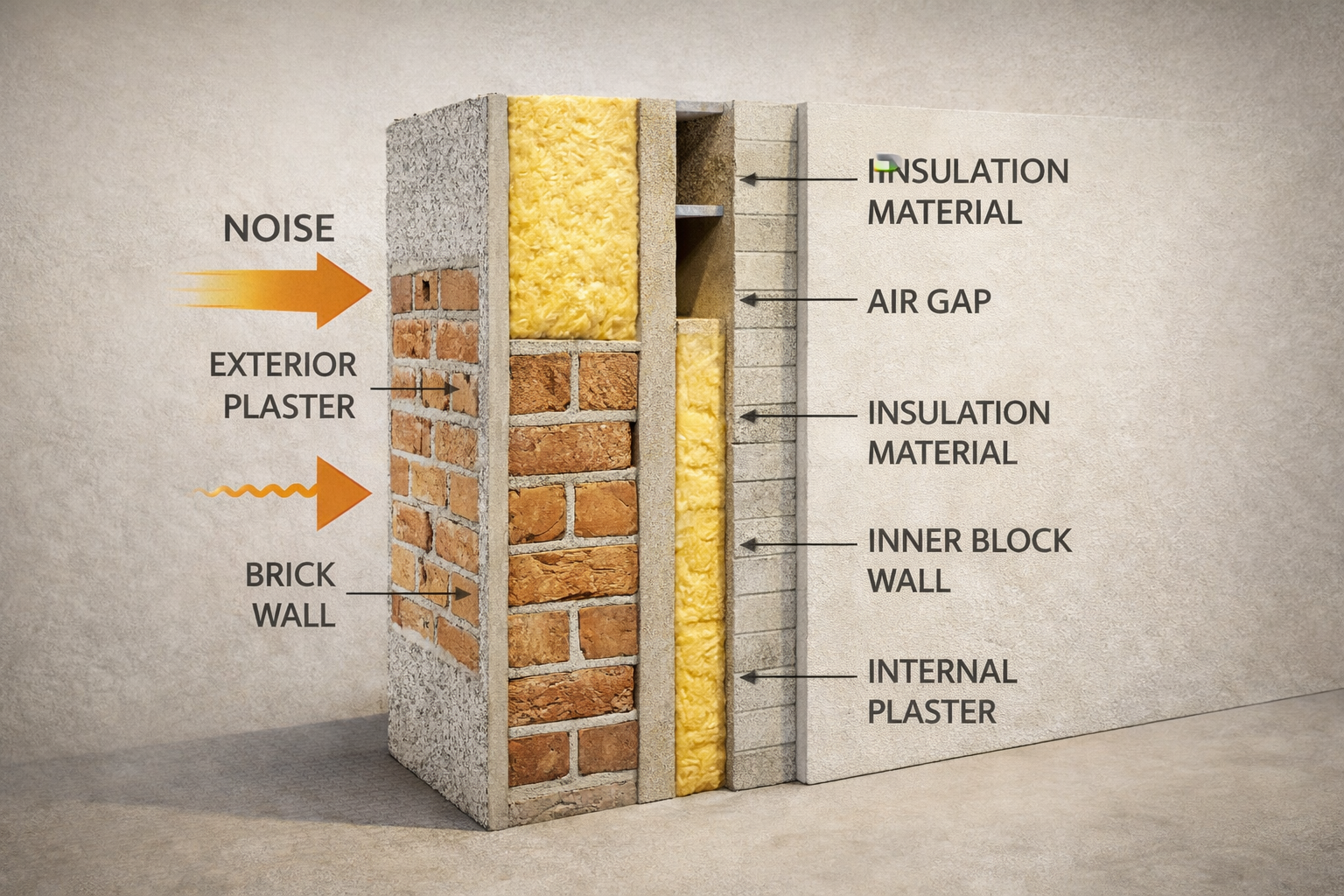
Walls are not just separators.
They are sound filters.
Modern architecture uses:
- Thicker walls in sensitive areas
- Double-layer walls with air gaps
- Strategic material combinations
This helps reduce:
- Neighbour noise
- Internal sound transfer
- Echo and vibration
4. Courtyards as Natural Sound Absorbers
Courtyards are not only for light and ventilation.
They also help with sound control.
A courtyard:
- Breaks sound travel
- Absorbs external noise
- Creates a calm internal atmosphere
This is why many of the best architects in Kerala reinterpret traditional courtyards for modern homes.
5. Ceiling Height and Sound Comfort
Low ceilings trap sound.
Very high ceilings can create echo.
Architects design:
- Balanced ceiling heights
- False ceilings where needed
- Sound-absorbing ceiling materials
This improves:
- Speech clarity
- Overall calmness
- Acoustic comfort
6. Doors, Windows, and Openings Matter More Than You Think
Most noise enters through:
- Windows
- Doors
- Gaps and joints
Architectural solutions include:
- Correct window placement
- Avoiding large openings near noise
- Using layered door systems in private areas
This is not about expensive materials.
It is about planning.
Openings and Noise Control

7. Layout Design That Reduces Internal Noise
Noise does not only come from outside.
Inside homes, sound comes from:
- TVs
- Kitchens
- Conversations
- Stair movement
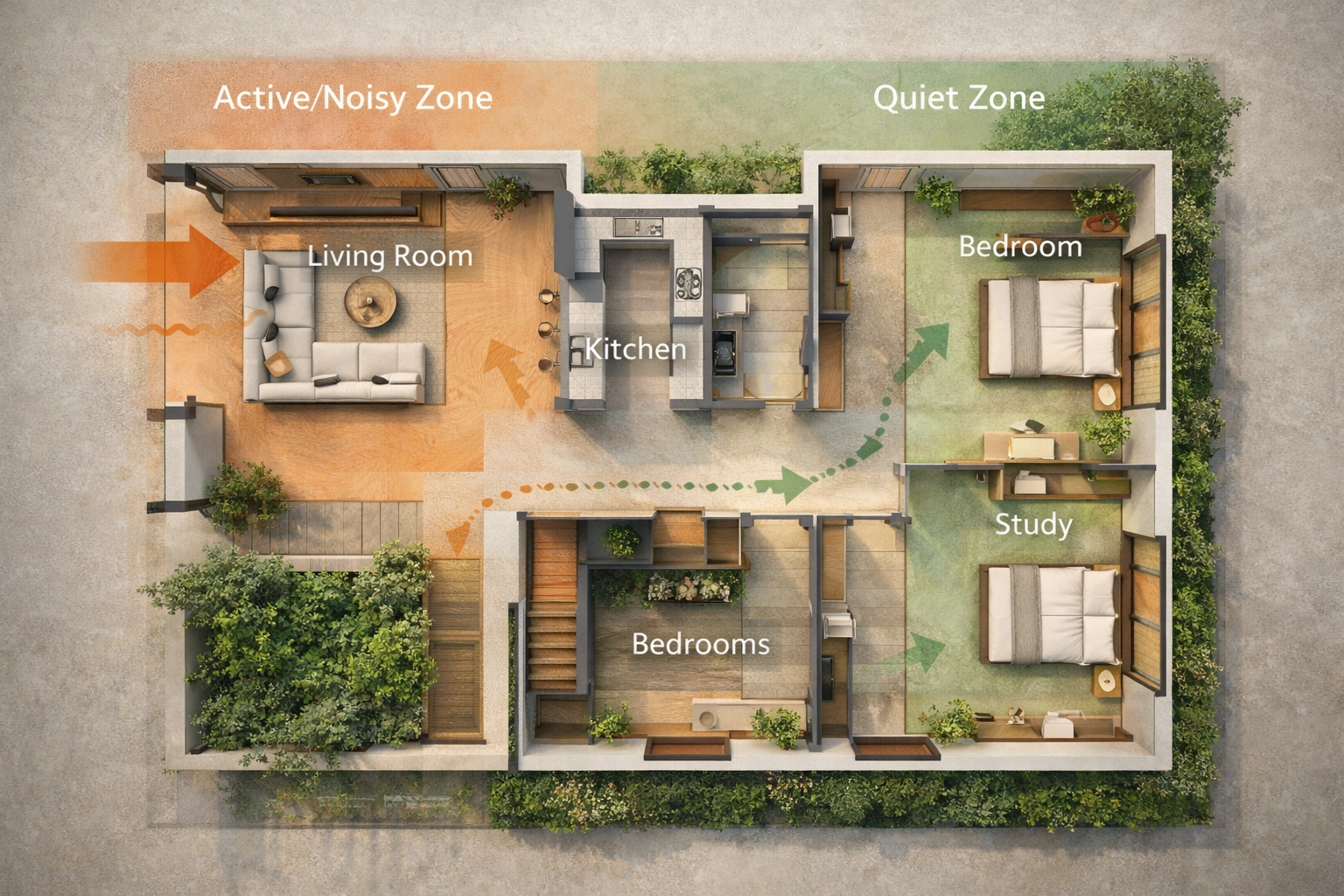
Architects design layouts so that:
- Sound does not travel directly
- Bedrooms are not next to noisy spaces
- Circulation paths act as buffers
8. Silence Through Furniture and Built-In Design
Architecture includes furniture planning.
Built-in elements:
- Wardrobes
- Storage walls
- Bookshelves
These act as sound buffers between rooms.
This is a subtle but powerful design method used by thoughtful architectural firms like R+A Architects.
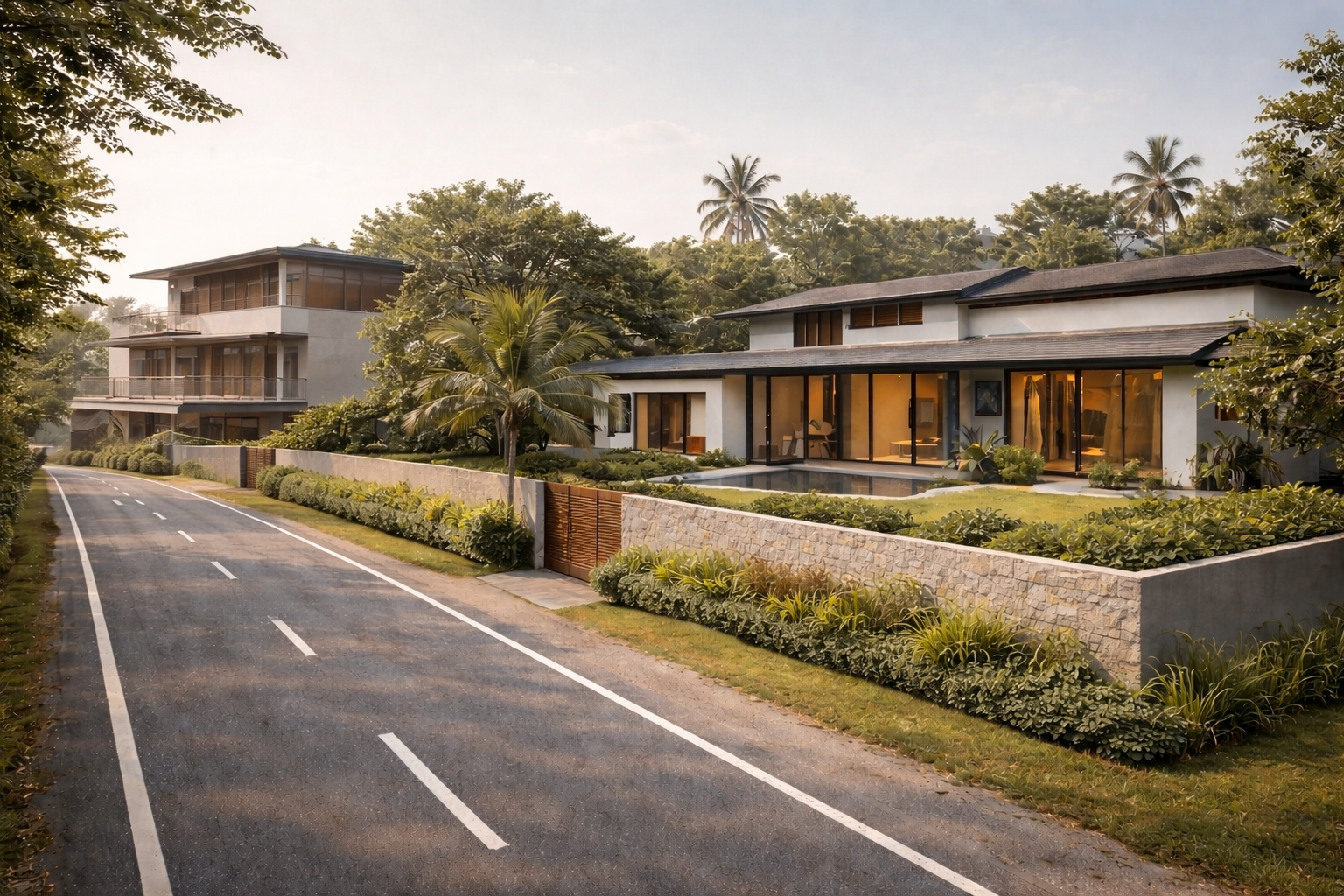
9. Landscaping as a Silent Partner
Plants are not just visual elements.
Landscape design helps:
- Absorb sound
- Reduce echo
- Create psychological calm
Trees, green walls, and gardens form the outer silence layer of the home.
10. Quiet Corners: A New Architectural Priority
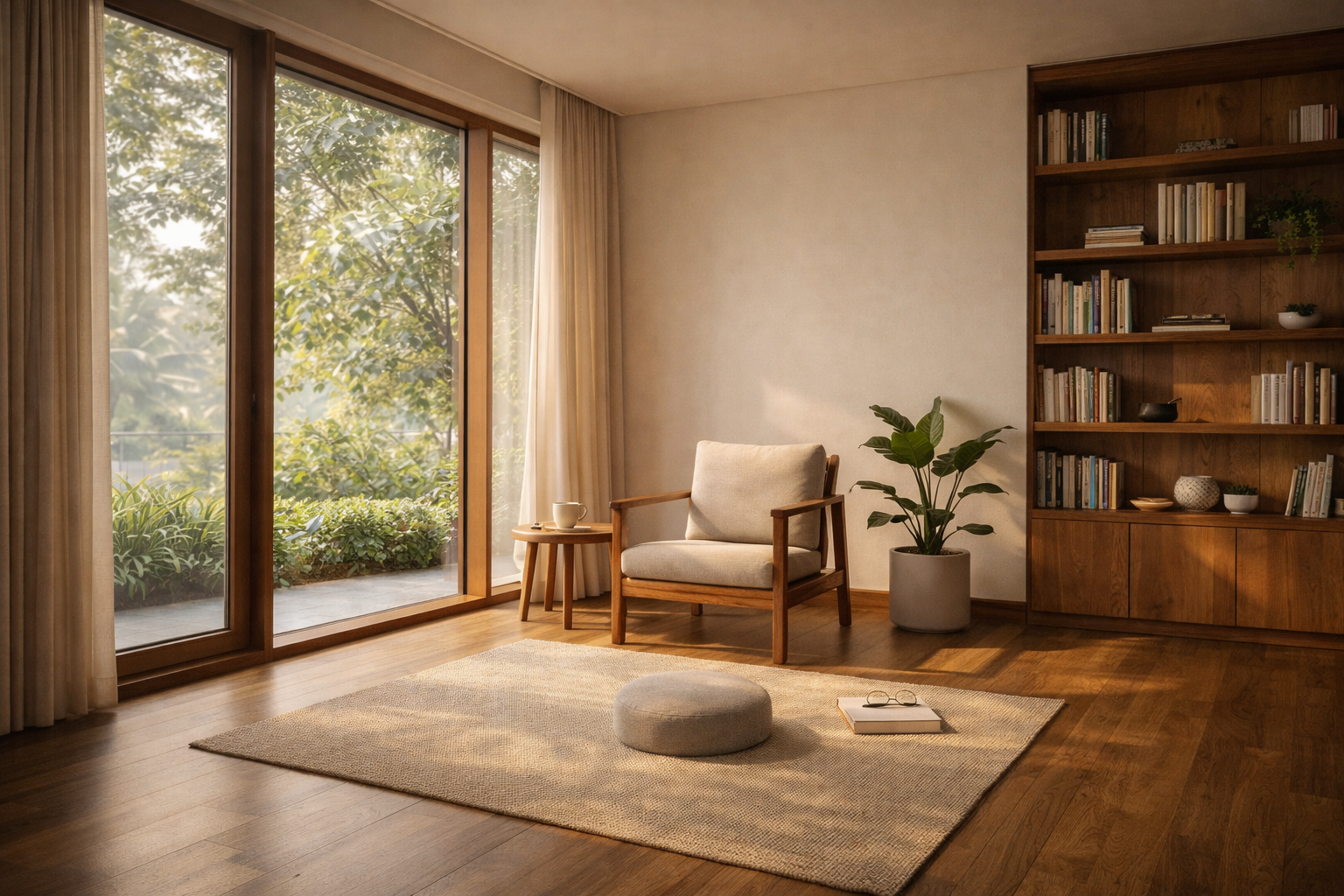
In modern homes, architects now intentionally design:
- Reading corners
- Meditation spaces
- Calm window seats
- Silent work nooks
These are not leftover spaces.
They are planned quiet zones.
A quiet corner today is as important as:
- A bedroom
- A kitchen
- A bathroom
Silence and Mental Well-Being
Silence directly affects:
- Sleep quality
- Stress levels
- Focus
- Emotional balance
Homes that are quiet:
- Feel larger
- Feel safer
- Feel more comfortable
This is why silence is increasingly discussed among the best architects in Kerala as a design responsibility.
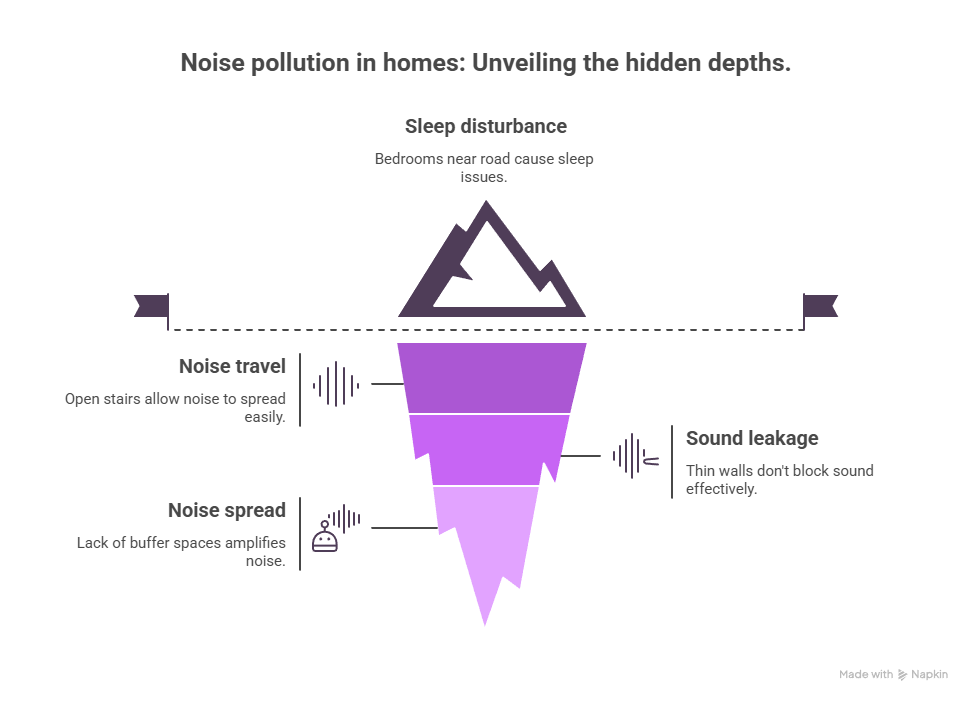
Common Mistakes That Destroy Silence in Homes
Many homes lose quietness because of:
- Poor layout decisions
- Copy-paste designs
- Ignoring site noise
- Over-open planning without buffers
Once built, these problems are difficult and expensive to fix.
Mistakes vs Correct Architectural Thinking
Why Silence Separates Good Architecture From Average Construction
Builders focus on:
- Structure
- Cost
- Speed
Architects focus on:
- Experience
- Comfort
- Long-term living quality
Silence is not visible in elevation drawings.
But it is felt every day.
That is why homeowners who work with experienced architects in Kerala often say:
“The house feels calm.”
Silence as a Long-Term Investment
A quiet home:
- Ages better
- Requires fewer changes
- Supports changing life stages
- Improves daily quality of life
This is not a trend.
It is a permanent shift in how homes are designed.
Conclusion: Silence Is the New Luxury
In 2026, luxury is not:
- Bigger rooms
- Louder designs
- Shiny materials
Luxury is:
- Calm mornings
- Quiet nights
- Peaceful spaces
- Homes that support mental rest
Silence is no longer accidental.
It is architectural intelligence.
Firms like R+A Architects approach silence not as an add-on, but as a core design value, creating homes that feel calm, balanced, and deeply livable.
About the Author
Mohammed Rashid
Founder & Principal Architect, R+A Architects
Mohammed Rashid, Founder & Principal Architect at R+A Architects, holds a B.Arch from Anna University. With 60+ projects across India, Dubai, and Europe, and awards including India Design 2023 and Stellar Design 2024, he champions modern Kerala architecture rooted in climate, comfort, and culture.
in Architecture
Related Reading
- Architectural Services in Perinthalmanna, Kerala
- Architecture & Design Insights for Kerala Homes & Businesses
Explore next: