
What Defines Modern vs Traditional Architecture in Perinthalmanna?
PTM shows a strong 70% shift to modern homes, with traditional styles still emotionally important.
Many families and NRIs ask the same thing:
Modern vs. traditional architecture in Perinthalmanna—which is better for our plot and lifestyle?
In town areas and busy stretches like Manjeri Road, Bypass, and Thazhe Chovva, modern homes Kerala builders create tend to dominate. These houses usually have:
- Flat or near-flat roofs
- Large windows and skylights
- Minimalist elevations
- Open-plan living spaces
In contrast, traditional Kerala house design is easy to spot in Angadippuram, Melattur, and Kunnumpuram:
- Sloped tiled roofs with deep overhangs
- Wooden columns and detailing
- Courtyards and thick walls
- Strong cross-ventilation
Local observations show a clear trend:
- 70% modern
- 20% hybrid (modern + Kerala features)
- 10% traditional
For a deeper climate-first view, this article works well with your own Kerala climate-responsive home planning guide on your site.
Climate Performance in Kerala: Which Style Works Better?
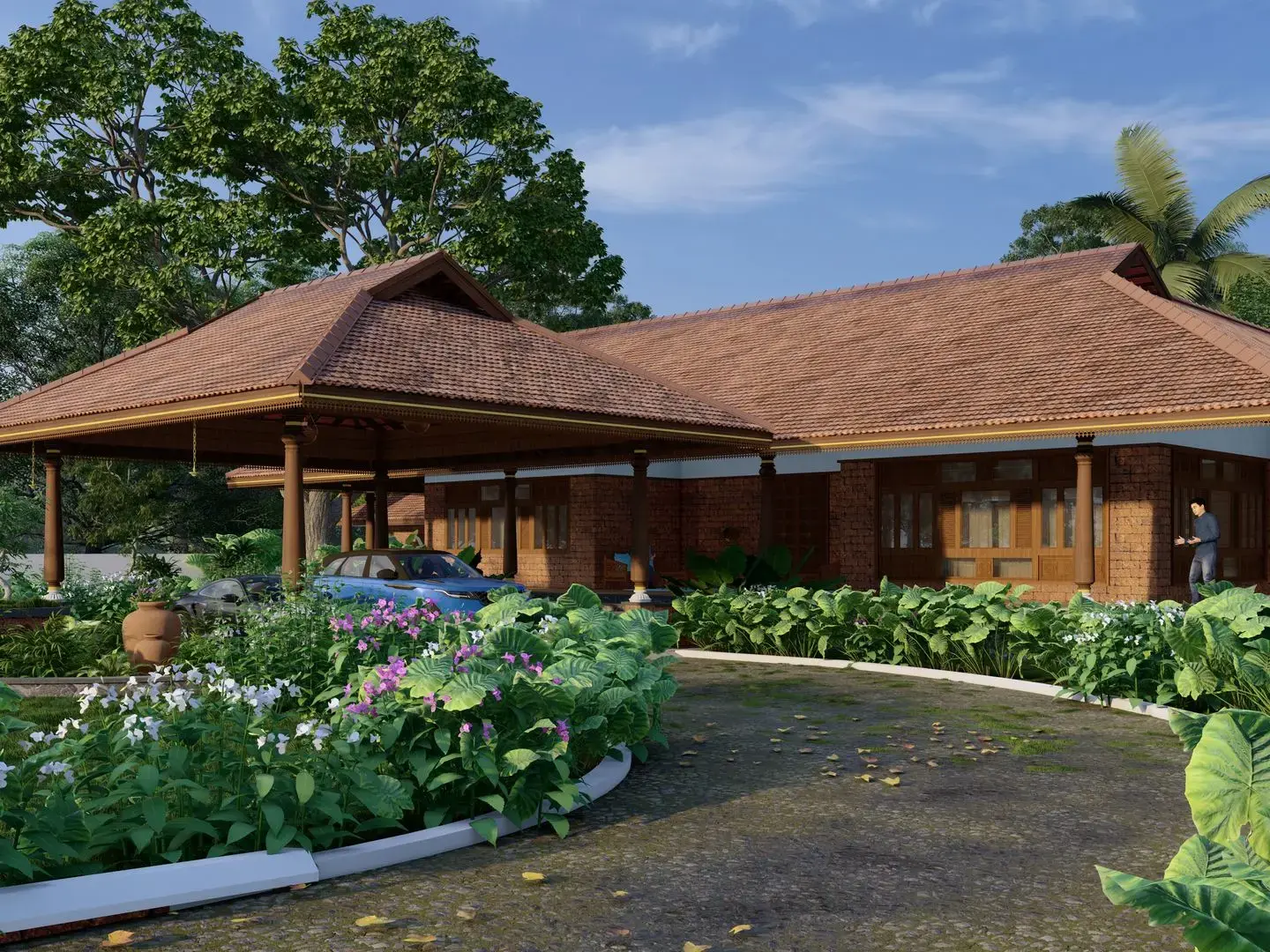
Traditional homes can stay 1.5–2.5°C cooler indoors in PTM summers without AC.
Perinthalmanna’s climate is hot and humid with strong monsoons. If you design without thinking of sun and rain, even a good-looking home becomes uncomfortable.
Traditional advantages:
- Sloped tiled roofs push rain away fast.
- Deep overhangs shade walls and windows.
- Courtyards and high ceilings keep air moving.
Modern challenges:
- Large glass areas heat up rooms if unshaded.
- Flat roofs need good waterproofing and insulation.
How to make modern work in PTM:
- Add roof insulation and a light roof color.
- Use pergolas, fins, or deep sunshades on west-facing glass.
- Plan cross-ventilation and window openings carefully.
Climate Performance Table
Factor | Modern Home | Traditional Home | Date |
Avg indoor temp in summer (°C) | 33°C | 30.5°C | 2024 |
Monsoon suitability | Needs extra waterproofing | Very good with sloped roofs | 2023 |
Natural ventilation level | Medium | High | 2024 |
For broader rainfall and climate data across Kerala districts, you can refer to IMD rainfall statistics for Kerala. Mausam+1
For design ideas on natural ventilation and insulation, IIT Madras shares useful case studies in their natural and environment-friendly thermal insulation for buildings. IITM Tech Talk+1
Space & Plot Efficiency in PTM
Modern layouts use 4–6 cent plots in PTM more efficiently than traditional layouts
Inside Perinthalmanna town, most plots are narrow and small. Here, modern styles usually win:
- Straight walls and compact staircases
- Cantilevers for balconies or car porch
- Simple structural grid
Traditional homes need:
- More front setback
- Roof overhangs
- Wider verandahs
On a 4–6 cent site, these features can eat up precious space. This is one reason many PTM families choose modern or hybrid designs for small town plots.
Cost Compariso₹2,200–3,200/sq ftn: Modern vs Traditional Homes
Modern homes in PTM are often 8–15% cheaper to build for the same area.
Approximate cost bands (will change with market):
- Modern: ₹1,900–2,600/sqft
- Traditional: ₹2,200–3,200/sq ft
- Hybrid: ₹2,000–2,800/sqft
The main reason is wood. Quality timber like teak and anjili has become expensive. When you add carved doors, paneling, and rafters, costs rise fast.
You can explain this further on your own site with a detailed Kerala home construction cost breakdown.
Before you finalize any design or estimate, it is wise to cross-check setbacks, coverage, and height limits in the official Kerala Municipality Building Rules, 2019. LSG Kerala+1
Which Style Works Best for NRIs?
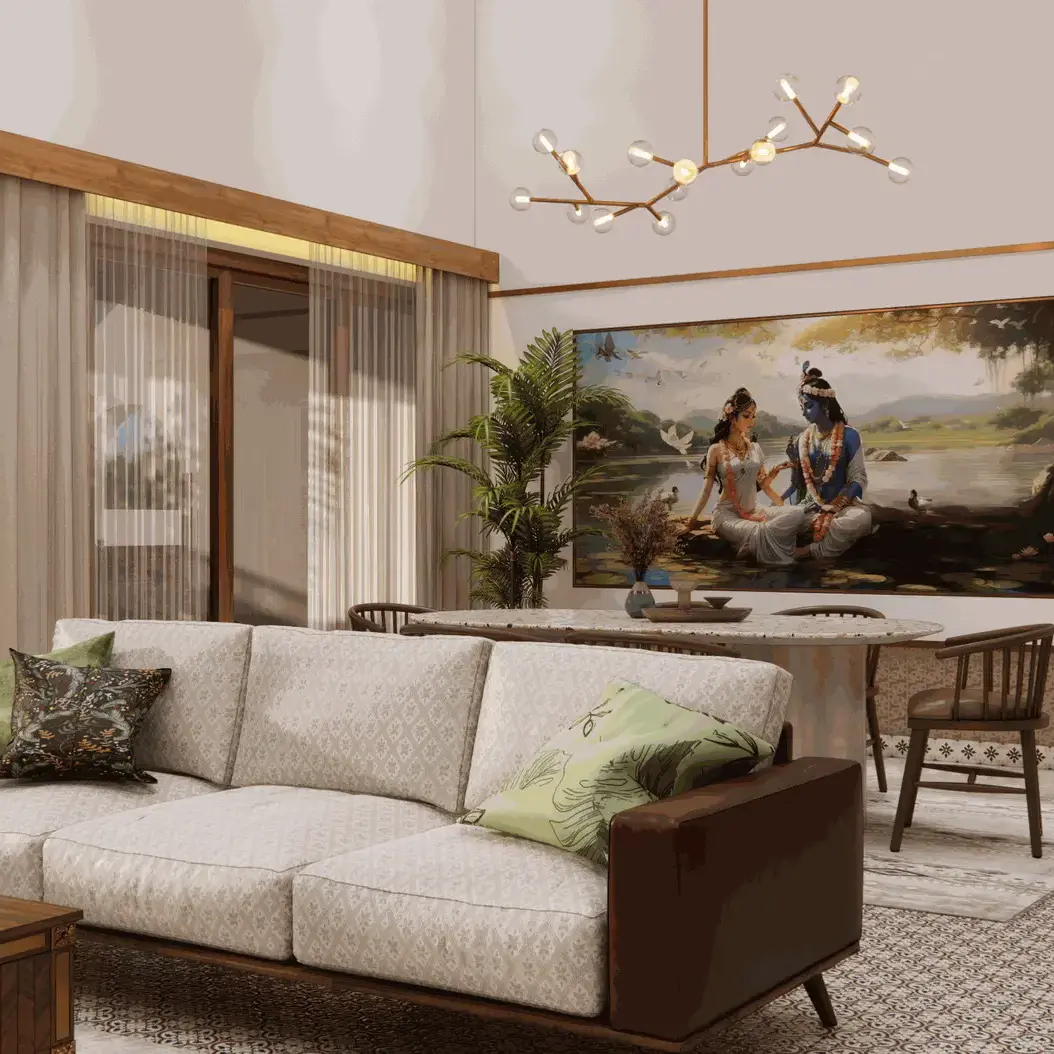
Modern and hybrid homes are usually easier for NRIs to manage remotely.
If you live in the UK, Europe, or GCC and build in PTM, you depend on clear updates.
Why modern helps NRIs:
- Flat roofs and simple stages → easier to track in photos and videos.
- Fewer custom carpentry stages → fewer delays.
- Predictable timeline for slab, brickwork, and finishing.
Traditional projects can still work, but sloped-roof woodwork often gets delayed in heavy monsoon periods.
To help prospects further, you can link from this section to your own detailed NRI guide to building a home in Kerala.
Most Requested Home Design Features in PTM (2024–2025)
Claim: Skylights, double-height spaces, and sloped Kerala accents lead PTM home design requests.
From recent project patterns in Perinthalmanna:
- Skylights: about 45% of new design requests
- Double-height living: around 52%
- Sloped Kerala elements on front elevation: close to 38%
- Fully traditional homes: roughly 10%
Most families want modern front elevations but still ask, “Can we keep a Kerala feel?”
So hybrid has become the middle path: flat roof + one sloped block, clean interiors + a few warm wooden details.
Long-Term Value & Resale: Which Style Wins?
Claim: Hybrid homes usually provide the best balance of resale value, comfort, and character in PTM.
Think of “value” as:
- Comfort (heat, light, ventilation)
- Emotion (pride, Kerala character)
- Resale (what future buyers will pay)
Modern only:
- Great in small plots
- Clean look, easy maintenance
- But may feel “generic” if climate design is weak
Traditional only:
- Strong Kerala identity
- Good cooling
- But more expensive and slower to build
Hybrid:
- Kerala soul + modern comfort
- Better chance of pleasing both local buyers and NRIs later
Common Mistakes Homeowners Make
Most design regret in PTM comes from choosing style before studying plot and climate.
Frequent issues:
- Copying a Kochi or Bangalore design
PTM soil, humidity, and rainfall are different. What suits a dry suburb may fail here. - Ignoring sun direction
West-facing glass walls look good on paper but can be hot in real life. - Underestimating wood cost
Full-wood ceilings, staircases, and verandahs quickly push budgets up. - No clear plan for remote supervision (NRIs)
Without fixed reporting, even a simple design can drag.
5.Treating waterproofing as “extra”
In PTM monsoon, weak roof details lead to damp ceilings and mould.
Real PTM Project Insight
A hybrid design in Angadippuram reduced heat and made remote NRI supervision smoother.
A UK-based NRI family purchased a west-facing plot in Angadippuram. They first wanted a full modern, flat-roof home with large glass.
During design reviews, the team explained the harsh evening sun and monsoon winds. The final solution:
- Flat main roof for cost and ease
- A sloped tiled overhang on the most sun-exposed side
- Shaded verandah with cross-ventilation
Outcome:
- Indoor temperatures dropped by around 2°C in late afternoons (compared with a plain flat roof).
- Weekly video reports were simple because most structural stages were still modern and predictable.
This is a common pattern: a small Kerala touch solves a real climate problem without turning the entire project into a high-cost traditional build.
Side-by-Side Style Comparison Table
For PTM, modern and hybrid styles often score better on plot use and NRI-friendliness.
Feature | Modern | Traditional | Hybrid |
Cooling | Medium | High | High |
Upfront cost | Low | High | Medium |
NRI management | High | Medium | High |
Kerala character | Low | High | Medium |
Plot efficiency | High | Low | High |
Checklist: Choose the Right Style Quickly
Do this now:
- Step 1: Write down your plot size (cents) and rough shape.
- Step 2: Stand on site at 12 PM and 4 PM; note where the sun hits.
- Step 3: Ask your engineer/contractor about soil type and drainage.
- Step 4: Decide your priority: open-plan living, privacy, or cross-ventilation.
- Step 5: Note if you live abroad and need a remote-friendly build.
Proof you keep: A dated phone note with a simple sketch and sun arrows.
Checklist for NRIs Managing Projects Remotely
A structured remote plan can cut NRI build stress by half.
Do this now:
- Step 1: Fix a weekly video call for site updates (same day/time).
- Step 2: Ask for a clear schedule: foundation → slab(s) → roof → finishing.
- Step 3: Approve tiles, fixtures, and key materials by photo or video before purchase.
- Step 4: Use a shared folder for drawings, invoices, and weekly progress photos.
- Step 5: Pay special attention to roof details and waterproofing in photos.
Proof you keep: Shared drive link + weekly update notes.
Frequently Asked Questions
These FAQs cover the most common 2025 questions from PTM homeowners and NRIs.
1. Which is cheaper in Perinthalmanna — modern or traditional?
Modern homes are usually 8–15% cheaper because they need less expensive woodwork and have simpler roof structures.
2. Which stays cooler in Kerala’s climate?
Traditional Kerala homes often stay 1.5–2.5°C cooler indoors, thanks to sloped roofs, ventilation, and shaded verandahs.
3. Is hybrid design complicated to build?
Not really. It is usually a modern structure with selected Kerala elements. The key is planning those elements early with your architect.
4. Which style is best for NRIs?
Modern or hybrid is usually best, because flat roofs and standard details are easier to track with photos, videos, and structured reports.
5. Which style gives better resale value?
Hybrid often offers the best mix of emotion, comfort, and buyer appeal, especially in growing PTM localities.
Related Reading
- Architectural Services in Perinthalmanna, Kerala
- Architecture & Design Insights for Kerala Homes & Businesses
Explore next:
- Why Framed Homes Define Modern Construction in Kerala
- Modern Architecture Design Trends in Kerala
- The Role of an Architect in a Kerala Home Construction Project
Author Bio
Claim: Strong author credentials build trust for high-value home decisions.
Mohammed Rashid
Founder & Principal Architect, R+A Architects
- B.Arch, Anna University
- 60+ residential and commercial projects across India, Dubai, and Europe
- Awards: India Design 2023, Stellar Design 2024
- Core focus: climate-responsive modern Kerala architecture rooted in comfort and culture
- Special interest in helping NRIs build in Kerala with clear, remote-friendly processes
- Design belief: “A home must respect climate, reflect who you are, and still feel peaceful after ten years.”