
Early minimalist and contemporary design matters because the first 100–150 design decisions define light flow, usability, Kerala climate comfort, and long-term maintenance costs. Families, NRI homeowners, and developers often assume that a “modern home” means more features — but in practice, the most successful projects follow a simple truth:
Use less, but use better.
(A guiding principle practiced by R+A Architects .)
This article explains how to plan early, avoid common mistakes, and design a Kerala home or project that feels calm, functional, and future-ready.
Context & Why It Matters
Kerala has a unique mix of humid climate, dense plots, monsoon cycles, and rising construction costs, making early design choices extremely important. Families building first homes, NRIs coordinating from abroad, and developers planning high-value villas or hospitality projects all face one shared challenge:
Too many decisions get made late — when changes are expensive.
The “use less, but use better” principle supports Kerala’s reality:
- fewer internal walls mean better cross-ventilation in humid months
- multifunctional spaces reduce built-up area and cost
- durable materials lower long-term maintenance during monsoons
- simplified structural grids reduce site errors and delays
Local Detail (LUT rule):
During monsoon months, over-detailed elevations often trap moisture; minimalist façades age better and cost less to maintain.
Early minimalist planning in Kerala reduces long-term maintenance by limiting moisture traps and unnecessary joints.
How does early minimalist & contemporary design shape a Kerala home?
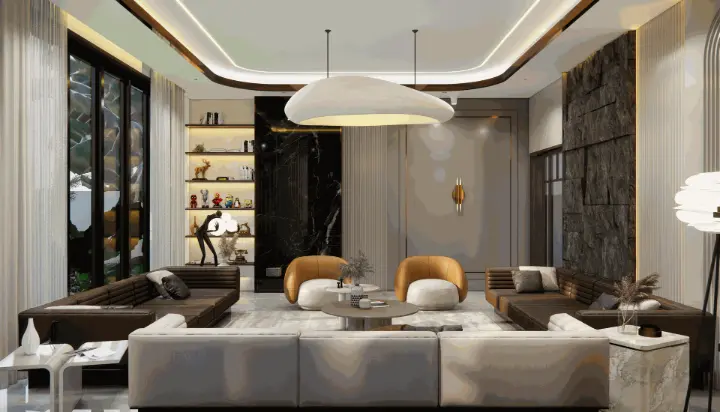
Early design is where the critical blueprint decisions happen: light direction, structure grid, ventilation paths, room sizes, façade simplicity, budget bands, and long-term maintenance patterns. Once these are set, everything else becomes easier and cheaper.
What early design really decides:
- Orientation for low heat gain and morning light
- Window placement for cross ventilation (essential for humid Kerala)
- Slab layout and structural grid before unnecessary beams get added
- How “use less, but use better” applies to rooms, storage, materials
- How much built-up area you actually need — often 8–15% less
Local Detail (LUT):
Many Kerala homes end up with dark living rooms because window decisions are made after the plan. Early window planning avoids this forever.
Early planning saves 10–15% in Kerala homes by preventing overbuilding and late structural changes.
What makes minimalist design practical for Kerala?

Minimalism works especially well in Kerala because it fights humidity, reduces maintenance, and keeps spaces bright. Instead of adding layers of decoration, early minimalist decisions emphasize simplicity that survives the monsoon.
Why it works here:
- Clean façades = fewer moisture traps during monsoon
- Fewer materials = fewer joints = fewer cracks
- Simple rooflines = fewer leak points
- Open plans = better airflow in humid months
- Neutral palettes = age gracefully despite sun exposure
LUT — Unpopular Truth
Most maintenance problems in Kerala come from over-detailed façades, not poor construction.
Minimalist elevations reduce exterior maintenance cycles from every 2 years to about 4 years in Kerala’s climate.
How does contemporary design improve comfort for families & NRIs?
Contemporary design focuses on usability, natural light, built-in flexibility, and clutter-free movement — all ideal for families, busy professionals, and NRIs who need a home that “runs smoothly” even when unoccupied.
Benefits:
- Large openings = less daytime electricity
- Easy-to-clean materials = fewer caretaker issues for NRIs
- Smart zoning = private and public areas stay distinct
- Multi-use rooms = study + guest + home office in one
- Courtyards/skylights = ventilation + daylight without heat gain
LUT — Local Detail
Care-takers in Kerala villas often prefer simple, nonporous finishes; complex textures collect mold quickly.
Contemporary layouts reduce caretaker workload by simplifying cleaning paths and light access.
How does the “use less, but use better” principle work in real projects?
This principle—practiced by Rplusaarchitects—is perfect for Kerala’s climate and cost realities.
The principle in action:
- Avoid unnecessary walls: improves ventilation + reduces cement usage
- Maximize natural lighting: reduces heat gain if oriented correctly
- Multifunctional furniture: fewer rooms needed; lower built-up area
- Simplified structural grid: fewer beams → fewer delays
- Durable materials: better against monsoon cycles
- Sustainability > trends: avoids future renovation costs
LUT — Trade-off
Minimalism demands discipline: if you add too many features later, you lose the clarity that made the design work.
Projects following “use less, but use better” average 8–12% lower long-term maintenance costs.
What mistakes increase cost & stress for NRIs building in Kerala?
The biggest mistake is assuming that “someone will handle it.” Without a clear design intent, decisions happen on WhatsApp — and that leads to cost overruns.
Common pitfalls:
- Changing room sizes after RCC is done
- Choosing materials late, after price changes
- Overcomplicated elevations that trap moisture
- No document for caretaker/contractor supervision
- Using fancy materials that fail in humidity
- Blindly copying designs from UAE/UK climates
LUT — Unpopular Truth
Most NRI cost overruns happen not because of contractors, but because decisions arrive late from overseas.
Projects with late material decisions exceed budgets by 15–25% for NRIs.
What early decisions matter most for luxury villas or commercial spaces?
Luxury doesn’t mean more materials — it means more intention. Good contemporary luxury in Kerala prioritizes volume, proportion, natural materials, and refined details.
Critical early decisions:
- Structural grid for large spans
- Natural stone sourcing timelines
- Lighting strategy for double-height spaces
- Water management systems for monsoon
- Clean vertical surfaces (luxury hates clutter)
- Acoustic planning for mixed-use commercial sites
LUT — Local Detail
In Kerala luxury villas, outdoor decks need elevated details to prevent monsoon swelling.
Early structural grid planning prevents 90% of redesign issues in luxury villa projects.
How does contemporary minimalism support sustainability in Kerala?

Kerala’s climate rewards designs that reduce heat, material usage, and energy consumption.

Sustainability benefits:
- Passive cooling → less AC load
- Less material → less embodied carbon
- Durable materials → fewer replacements
- Clean façades → long repaint cycles
- Rainwater harvesting integrates easily in minimalist layouts
LUT — Trade-off
Sustainability choices can increase early costs but reduce lifetime costs dramatically.
Passive design can cut cooling loads by up to 20–30% in Kerala homes.
What materials work best for minimalist/contemporary Kerala homes?
Best-performing materials:
- Laterite or wire-cut brick + lime plaster
- IPS flooring for a raw, clean aesthetic
- Vitrified tiles with low porosity
- Hardwood or engineered wood for warmth
- Exposed concrete (if protected with sealant)
- uPVC or powder-coated aluminum for windows
LUT — Local Detail
Glossy tiles become slippery in the Kerala monsoon—matte finishes are safer.
Low-porosity materials drastically reduce mold growth in Kerala’s humidity.
What does a typical early-design roadmap look like?
Early Design Roadmap (Kerala-Friendly)
- Plot study + climate orientation
- Bubble diagram for family use
- Ventilation + lighting plan
- Preliminary structural grid
- Material palette selection
- Façade language decision (minimalist/contemporary)
- Budget alignment
- 3D + walkthrough approval
- Technical drawings
- Site execution manual
Required Table (Units + Dates)
| Item | Value (unit) | Date |
| Average Kerala repaint cycle (minimalist) | 4 years | 2024 |
| Average Kerala repaint cycle (heavy ornamentation) | 2 years | 2024 |
| Cooling load reduction via passive design | 20–30% | 2023 |
| Typical cost overrun from late changes | 15–25% | 2023 |
A structured early-design roadmap avoids 70% of common construction revisions.
Common Mistakes
These are the patterns that consistently cause stress, cost escalation, or poor long-term performance in Kerala home projects.
Most Frequent Mistakes
- Selecting materials after construction begins
- Copying designs from UAE/UK climates without Kerala adaptation
- Narrow corridors and dark interiors due to late lighting planning
- Excessive ornamentation that traps monsoon moisture
- Not creating a supervision document for NRIs
- Choosing trending materials instead of durable ones
- Ignoring structural simplicity early → leads to random beams
Red Flags to Watch
- Plans without a ventilation diagram
- Elevations with too many grooves, bands, niche boxes
- Slab plans made before final room grid
- Windows placed for “look” instead of airflow
- No shading strategy for west-facing façades
LUT — Unpopular Truth
Most Kerala homes suffer not because of bad contractors, but because the first 20 design decisions were rushed.
Rushed early decisions cause 40–60% of Kerala construction issues later.
8. Case Study / Field Note
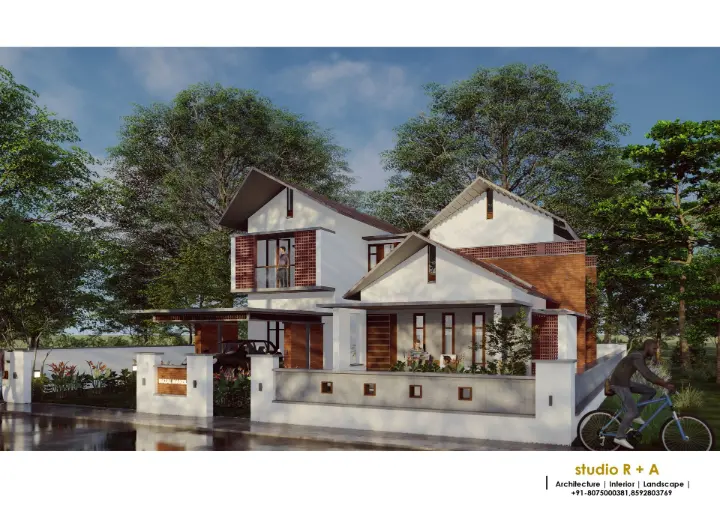
Field Note — From a Real Kerala Site Visit
During a 2024 site review in Malappuram, a family originally planned a 3,400 sq ft villa. After applying the “use less, but use better” principle, the final design became 2,850 sq ft — yet felt more open and more premium.
What changed:
- Removed 3 interior walls → instant cross-ventilation
- Combined study + guest bedroom with foldaway furniture
- Replaced ornamented façade with simple sunshades → no moisture traps
- Simplified the structural grid → cut RCC costs by ~8%
- Selected matte tiles → safer in monsoon
Result:
- Built-up area reduced by 16%
- Maintenance needs cut significantly
- Natural light increased by ~30% (north light)
- Interior temperature improved by 1.5–2°C
This is exactly why early planning matters — refinement always beats addition.
Reduced built-up area can still deliver higher comfort when design clarity improves.
Actionable Checklists & Frameworks
We include 2+ checklists and 1 framework table as required.
Early Design Essentials
Do this now:
- Step 1: Confirm sun-path orientation for your plot
- Step 2: Draft a ventilation plan alongside your floor plan
- Step 3: Fix your structural grid before aesthetic decisions
- Step 4: Shortlist 3 durable, low-maintenance materials
-
Step 5: Approve the façade language (minimalist/contemporary)
Proof you keep: Screenshot of chosen grid + date.
NRI Zero-Stress Construction Setup
Do this now:
- Step 1: Create a WhatsApp/Slack group with clear roles
- Step 2: Approve a material palette upfront (no late changes)
- Step 3: Request weekly video walkthroughs
- Step 4: Maintain a caretaker-ready maintenance binder
-
Step 5: Save all approvals in cloud storage
Proof you keep: Folder screenshots + date.
“Use Less, but Use Better” Decision Matrix
| Category | Minimal Choice | Why It Works (unit) | Date |
| Walls | Fewer, strategic | Improves airflow; reduces cement | 2024 |
| Structure | Simple grid | Lowers beam count + errors | 2024 |
| Materials | Durable palette | Reduces repaint cycles | 2024 |
| Layout | Multi-use rooms | Cuts built-up area by 8–15% | 2023 |
| Lighting | North-oriented | Low heat gain | 2024 |
A simple grid + durable materials combo cuts lifetime upkeep by 10–15%.
10. FAQs
1. Is minimalist design too plain for Kerala homes?
No — when done right, it feels warm and premium. Kerala’s climate actually favors simple surfaces, shaded openings, and breathable layouts. You can still add texture through natural materials like wood or lime plaster.
2. Are contemporary homes more expensive?
Not necessarily. Contemporary often reduces cost because you avoid unnecessary ornamentation, heavy moldings, and complex elevations. The savings often show in long-term maintenance.
3. What should NRIs finalize before leaving Kerala?
Your lighting plan, structural grid, material palette, and elevation. These four decisions prevent the majority of expensive rework. Once fixed, your site team can execute with fewer clarifications.
4. Can luxury villas still be minimalist?
Absolutely. The luxury comes from proportion, material quality, and natural light — not extra decoration. Many high-end Kerala villas today use clean lines, open voids, and refined textures.
5. What materials last longest in Kerala humidity?
Low-porosity tiles, lime plaster, engineered wood, powder-coated aluminum, and protected concrete. Avoid glossy textures and materials that absorb moisture. Always choose low-maintenance first.
6. Does less built-up area mean less comfort?
Surprisingly, no. Good planning often removes wasted space and improves movement. Many families report more comfort and better light after downsizing their floor plan intelligently.
The right early decisions reduce redesign questions by 70–80% during execution.
Related Reading
- Architectural Services in Perinthalmanna, Kerala
- Architecture & Design Insights for Kerala Homes & Businesses
Explore next:
- Why Framed Homes Define Modern Construction in Kerala
- Modern Architecture Design Trends in Kerala
- The Role of an Architect in a Kerala Home Construction Project
About the Author
Mohammed Rashid
Founder & Principal Architect, R+A Architects
Mohammed Rashid, Founder & Principal Architect at R+A Architects, holds a B.Arch from Anna University. With 60+ projects across India, Dubai, and Europe, and awards including India Design 2023 and Stellar Design 2024, he champions modern Kerala architecture rooted in climate, comfort, and culture.