
The Manikandan Residence in Kerala is an embodiment of this philosophy — a home that embraces tropical design principles while reflecting a modern identity.
It is a residence that doesn’t fight the weather but flows with it, celebrating light, air, and the natural warmth of the region.
Rooted in Climate, Shaped by Culture
Kerala’s humid tropical climate — averaging nearly 80% humidity year-round — calls for architecture that responds, not resists.
Buildings must breathe, shade, and adapt, using materials and forms suited to their environment.
The Manikandan Residence was designed with that sensitivity, translating traditional wisdom into a contemporary lifestyle expression.
Tropical design in Kerala lowers interior temperatures by 2–3°C through natural ventilation and shading.
(Source: IMD Climate Data)
(Field note: In Malappuram, homes using open verandas and shaded corridors report lower humidity indoors during monsoon months.)
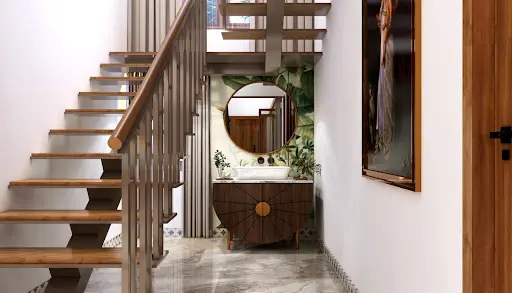
Why Tropical Design Matters Today
In a world dominated by sealed glass facades and mechanical cooling, tropical architecture reminds us of contextual intelligence — the kind of design that listens to its surroundings.
It encourages natural ventilation, daylight optimization, and passive cooling, reducing energy use and improving well-being.
By revisiting traditional strategies — verandas, courtyards, sloped roofs, and open volumes — we rediscover comfort that feels natural and effortless.
The Manikandan Residence shows how modern Kerala homes can evolve sustainably while respecting both heritage and the environment.
Explore our sustainable architecture approaches to see how design and climate can work in harmony.
Passive design reduces air-conditioning load by up to 30% in tropical homes.
(Source: World Green Building Council)
The Charm of the Sloped Roof
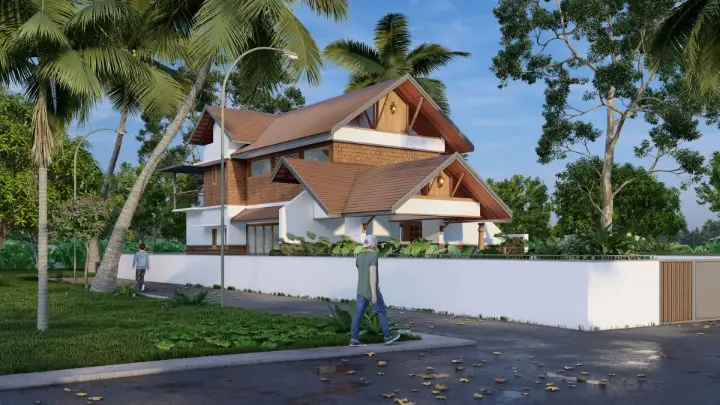
A defining feature of the residence is its sloped roof, a timeless element of Kerala architecture reinterpreted for today.
Beyond its visual appeal, the sloped roof performs vital climatic roles — it allows efficient rainwater drainage, reduces heat gain, and creates a cool internal microclimate.
Its layered form gives character and proportion to the façade while staying true to Kerala’s architectural DNA.
(Trade-off: While sloped roofs cost slightly more upfront, they save long-term on cooling and maintenance.)
Sloped roofs in Kerala homes reduce direct heat gain by 15–20% compared to flat roofs
Inviting Natural Light and Air
The design intent was simple — let in maximum natural light while maintaining comfort and privacy.
Large windows, strategically placed openings, and clerestory glazing bring daylight deep into the interior, reducing dependence on artificial light.
By aligning openings with prevailing wind directions, the home stays naturally ventilated all day.
A double-height volume enhances airflow — allowing warm air to rise and escape while cooler air circulates at lower levels.
This stack effect maintains freshness and amplifies the sense of openness.
Checklist:
- Step 1: Align major windows along east–west for balanced light.
- Step 2: Add cross-ventilation openings near the roofline.
- Proof you keep: Wind path diagram or daylight plan screenshot.
A Modern Touch to Kerala Vernacular
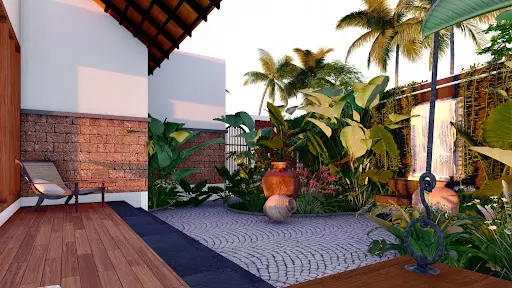
While deeply inspired by regional traditions, the Manikandan Residence redefines the Kerala home for today’s lifestyle.
Its language is clean and minimal — replacing heavy ornamentation with honest materials and proportion.
Textures like exposed concrete, wood, clay tiles, and muted earthy tones create a timeless palette that harmonizes with tropical greenery.
Our luxury home interiors in Kerala merge warmth and minimalism — balancing comfort with timeless style.
Modern Kerala design thrives on material honesty — using natural textures instead of surface luxury.
Comfort Through Simplicity
A key goal for this residence was to remain budget-friendly without compromising comfort or climate response.
Instead of expensive finishes, it relies on efficiency and detailing.
Cross-ventilation, shading devices, and durable materials ensure the home remains low-maintenance over time.
(Unpopular truth: Good tropical design isn’t about luxury — it’s about intelligence.)
Do this now:
- Step 1: Audit your floor plan for unused spaces and heat pockets.
- Step 2: Add a shading device like a pergola or screen wall.
- Proof you keep: Before/after temperature reading.
Remote Collaboration for Overseas Clients
For NRIs and overseas homeowners, distance doesn’t mean disconnection.
At R+A Architects, over 70% of international clients co-create their Kerala homes through digital tools — 3D walkthroughs, WhatsApp updates, and live video site reviews.
This ensures full transparency, fast decisions, and accurate visualization before construction begins.
Explore our architectural services in Kerala for guided project execution from concept to completion.
Digital collaboration reduces design turnaround time by nearly 25%.
(Trade-off: Virtual design works best when local site supervision is scheduled monthly for accuracy.)
Tropical Modernism — A Way Forward
The Manikandan Residence stands as a contemporary interpretation of tropical modernism — where context meets craft.
It celebrates Kerala’s natural environment while reimagining it for a new generation.
Through its sloped roof, airy interiors, and open transitions, the home becomes more than architecture — it becomes a living organism, attuned to the rhythms of the tropics.
Sustainable design starts not with technology, but with context-aware architecture.
For deeper learning, visit our design insights for Kerala homes and businesses.
The Essence of R+A’s Tropical Design Philosophy
At R+A Architects, tropical design is not a style — it’s a response.
Each project, including the Manikandan Residence, explores how climate, culture, and modern living can coexist gracefully.
We aim to create homes that are environmentally sensitive, emotionally warm, and architecturally timeless — spaces that belong as much to their people as to their place.
Common Mistakes to Avoid in Tropical Design
- Ignoring wind direction and site orientation.
- Using dark, heat-absorbing roofing materials.
- Over-reliance on artificial cooling.
- Poor rainwater drainage design.
(Tip: Keep openings shaded but open — never sealed.)
FAQs
1. Why is tropical design ideal for Kerala?
Because it balances light, shade, and ventilation, ensuring comfort and sustainability in Kerala’s humid climate.
2. Does tropical architecture cost more?
Not necessarily. It focuses on intelligent use of materials and layout, often reducing long-term costs.
3. Can NRIs design homes remotely in Kerala?
Yes. With digital tools and virtual walkthroughs, most clients manage their design fully online.
4. What makes sloped roofs important in the tropics?
They drain rainwater efficiently, reduce heat gain, and protect the structure from heavy monsoon exposure.
5. How do I keep my tropical home cool naturally?
Use cross-ventilation, shaded courtyards, and light-colored finishes that reflect heat.
Related Reading
- Architectural Services in Perinthalmanna, Kerala
- Architecture & Design Insights for Kerala Homes & Businesses
Explore next:
- Why Framed Homes Define Modern Construction in Kerala
- Modern Architecture Design Trends in Kerala
- The Role of an Architect in a Kerala Home Construction Project
About the Author
Mohammed Rashid
Founder & Principal Architect, R+A Architects
Mohammed Rashid, Founder & Principal Architect at R+A Architects, holds a B.Arch from Anna University. With 60+ projects across India, Dubai, and Europe, and awards including India Design 2023 and Stellar Design 2024, he champions modern Kerala architecture rooted in climate, comfort, and culture.