
Modern mansion design should not start with the front elevation. It should start with one question: how will the home feel at 7 a.m., 2 p.m., 8 p.m., and during a full-house family gathering?
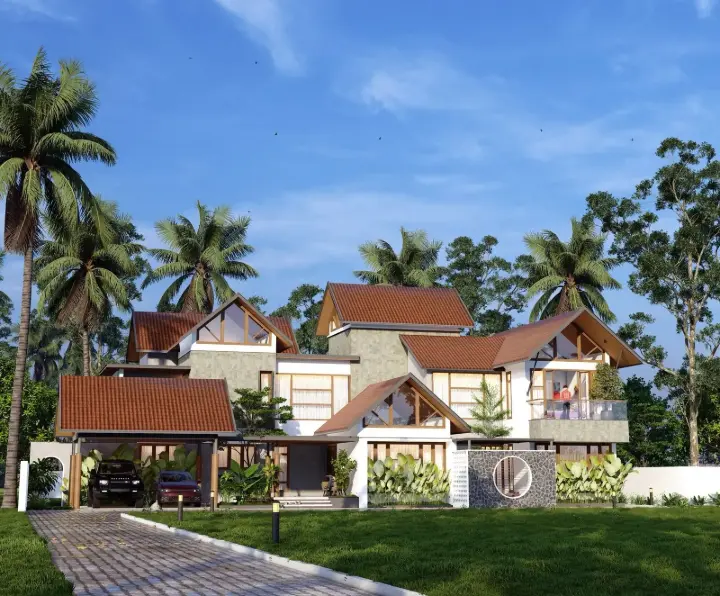
A modern mansion combines luxury, functionality, and contemporary aesthetics. It often includes clean architectural lines, open floor plans, large glass facades, seamless indoor-outdoor living, smart home automation, premium materials, private home theaters, wellness areas, infinity pools, landscaped gardens, and energy-efficient systems.
But a fully personal mansion goes further. It knows where the west sun hits. It hides staff movement without disrespecting staff needs. It gives the family privacy even when guests arrive. It keeps glass beautiful without turning rooms into heat boxes. It feels calm on normal weekdays, not only impressive during parties.
Professional review advised for structure, approvals, fire safety, waterproofing, electrical systems, HVAC, and energy compliance.
Modern mansion design should protect the owner’s real lifestyle
A mansion becomes luxurious when space, privacy, climate, and service movement are planned together.
The common mistake is treating a mansion as a collection of luxury items: glass facade, pool, theater, gym, big staircase, imported stone, and smart switches. That creates a large house, not always a good one.
A better modern mansion design starts by mapping real life. Who wakes first? Who hosts guests? Do parents need a quiet bedroom on the ground floor? Will the kitchen handle daily cooking or only display cooking? Does the family need a puja room, staff room, home office, pet wash, hobby room, or private garden?
For Indian homes, this matters because family life is layered. A home may need to support grandparents, children, guests, drivers, house staff, security, and festival gatherings. Privacy is not only about tall compound walls. It is also about what people can see from the entrance, road, balcony, staircase, service door, and neighbor’s terrace.
BEE’s residential building resources include Eco Niwas Samhita 2024, which is described as a measure for sustainability and energy efficiency in India’s building sector.
Local detail: In many Indian plots, the most private view is not always the best view. A courtyard may give better comfort than a full road-facing glass wall.
What is modern mansion design?
Modern mansion design is the planning of luxury around daily comfort, privacy, climate, and personal routine.
Modern mansion design is the design of a spacious, high-end home using contemporary architecture, simple forms, open planning, natural light, premium finishes, smart systems, and a strong connection between indoor and outdoor spaces.
The unique part is not the size. It is the order of decisions.
A modern mansion should first solve:
- Arrival and privacy
- Family circulation
- Guest movement
- Staff and service routes
- Sun, heat, rain, and wind
- Garden and pool placement
- Parking and security
- Future maintenance
- Daily storage
- Elder-friendly access
- Long-term energy use
Only after that should the design focus on facade style, material finish, lighting drama, and decor.
This is where many luxury homes fail. They look modern because they have glass and stone, but the floor plan still behaves like a badly arranged house. A true modern mansion should feel composed, useful, and personal.
Trade-off: A wide-open plan looks impressive, but selective privacy screens often make a mansion more comfortable for Indian family life.
Which features make a modern mansion feel luxurious
Luxury features should earn their place by improving comfort, hosting, privacy, wellness, or long-term value.
Feature | Recommended planning value (unit) | Date |
Double-height living | 5–7 m clear height | 2026 |
Private theater | 20–40 sq m | 2026 |
Gym or wellness room | 15–35 sq m | 2026 |
Master suite | 45–90 sq m | 2026 |
Outdoor lounge | 25–60 sq m | 2026 |
Four-car parking | 55–75 sq m | 2026 |
These are planning ranges, not fixed rules. Actual sizes depend on plot size, local development rules, budget, family needs, structural spans, furniture, and climate.
A luxury mansion may include a double-height living room, guest suite, family lounge, show kitchen, working kitchen, private office, library, home theater, spa, gym, pool deck, landscaped court, driver room, staff room, service yard, and covered parking.
The key is sequence. The family lounge should not be an afterthought. Storage should not be hidden until the interior stage. Staff circulation should not cut through the formal living area. The home theater should not share a thin wall with a bedroom. The pool should not create humidity problems for indoor spaces.
The RERA Act defines carpet area as the net usable floor area, excluding external walls, service shafts, exclusive balcony or verandah areas, and exclusive open terrace areas, while including internal partition walls. For homeowners, the lesson is simple: ask for usable area clarity, not only impressive built-up numbers.
Unpopular truth: A smaller, better-zoned mansion often feels richer than a larger home with poor room relationships.
How should the floor plan be zoned?
Good zoning separates guest drama, family privacy, service work, and quiet retreat areas.
A modern mansion should not let every route cross every other route. The home needs clear zones.
The arrival zone should create a sense of welcome without exposing the whole house. The public zone should handle guests, formal seating, powder room access, and event overflow. The family zone should feel softer, more private, and easier to use every day. The service zone should allow cooking support, laundry, storage, waste movement, maintenance, and staff access without disturbing the formal experience.
The best plans often include two kinds of beauty: visible beauty and hidden order. Visible beauty is the entry court, living volume, garden, pool, staircase, and material palette. Hidden order is the service corridor, storage wall, electrical room, pantry, laundry, pump room, staff access, and maintenance route.
Do this now:
Step 1: Mark guest, family, staff, and service routes in four colors.
Step 2: Circle every point where privacy is lost.
Step 3: Move service access away from formal seating where possible.
Step 4: Check whether elders can reach the bedroom, dining, prayer space, and garden without difficult steps.
Proof you keep: Dated zoning sketch, furniture plan, route diagram, and room-use notes.
Local detail: In Indian homes, a private family lounge behind the dining area often gets more daily use than the formal living room.
How should glass facades be used without overheating the home?
Glass works best when it is shaded first, styled second, and specified for heat, glare, and privacy.
Large glass facades can make a mansion feel open, bright, and connected to the garden. But in Indian climates, glass should never be treated as a simple sign of luxury.
The first question is not “how much glass can we add?” The first question is “which side deserves glass?”
North-facing or courtyard-facing openings are often easier to manage than exposed west-facing glass. Deep roof overhangs, vertical fins, pergolas, trees, screens, and recessed balconies can help reduce glare and heat. Curtains and blinds should be planned early because they need electrical points, pelmets, control systems, and maintenance access.
BEE says Eco Niwas Samhita Part I was prepared to set minimum building envelope performance standards to limit heat gains, which supports early attention to wall, roof, and opening design.
Trade-off: More glass can improve views, but shaded and selective glass usually gives better comfort than a full transparent facade.
Which materials make a mansion look premium and age well?
Premium materials should be selected for weather behaviour, repair access, slip safety, and ageing quality.
A modern mansion does not need many materials. It needs a few materials used with discipline.
Natural stone, textured plaster, concrete, engineered wood, metal screens, glass, large-format tiles, and warm interior finishes can all work well. The question is where they are used.
Outdoor stone should be checked for water absorption, staining, grip, and fixing method. Smooth outdoor floors can become risky during monsoon rain. Metal screens need protection in coastal or humid zones. Wood near wet areas needs careful detailing. Large-format tiles need skilled installation, level checks, and future replacement planning.
IGBC describes Green Homes as India’s first rating programme developed exclusively for the residential sector and based on accepted energy and environmental principles.
Unpopular truth: Imported material is not automatically better. A local material that handles heat, dust, rain, and repair better may be the more luxurious choice.
How should smart home automation be planned?
Smart systems should simplify daily living without making the house dependent on one app or vendor.
Smart home automation is useful when it supports real routines. It should not be added only because the home is expensive.
Start with safety: CCTV, access control, video door phones, motion sensors, outdoor lighting, gas leak detection where relevant, and fire alarm planning. Then add comfort: lighting scenes, curtain control, air-conditioning control, music, and home theater systems. Then add efficiency: energy monitoring, irrigation timers, pump controls, and solar monitoring where suitable.
The most important automation decision is not the brand. It is the backup plan. Key lights, gates, pumps, security systems, and essential circuits should have manual control. The homeowner should receive wiring drawings, login records, warranty details, and service contacts.
Do this now:
Step 1: Sort automation into must-have, nice-to-have, and avoid.
Step 2: Ask for a room-wise control schedule before wiring.
Step 3: Keep manual switches for essential systems.
Step 4: Record all app access, admin accounts, and handover details.
Proof you keep: Automation BOQ, circuit drawing, warranty list, and handover sheet.
Trade-off: Full automation gives comfort, but manual backup protects the home during Wi-Fi issues, app failure, or vendor delays.
How can a mansion stay energy-efficient without losing luxury?
Energy-efficient luxury begins with orientation, shading, roof design, insulation, and equipment sizing.
A mansion can have high energy demand because of large rooms, tall ceilings, outdoor lighting, pumps, pools, theater systems, air conditioning, and security systems.
Energy efficiency should start before equipment selection. First, reduce heat gain through orientation, shading, roof insulation, wall design, and window placement. Then plan daylight so the home feels bright without glare. After that, size air-conditioning systems properly. Finally, study solar, water heating, smart controls, and energy monitoring.
IGBC’s Green Homes programme covers residential planning themes such as site selection and planning, water conservation, energy efficiency, materials and resources, and indoor environmental quality.
Unpopular truth: Solar panels cannot correct every design mistake. A shaded, well-planned mansion usually performs better than a glass-heavy mansion with solar added later.
What safety and approval checks should happen early?
Safety, structure, setbacks, access, and approvals should be checked before final facade decisions.
Luxury does not reduce the need for compliance. Local rules vary by state, city, road width, plot size, height, floor area rules, occupancy type, and planning authority.
Before approving the final design, confirm setbacks, height limits, parking rules, staircase dimensions, structural system, electrical load, water supply, drainage, rainwater handling, fire access where required, and completion or occupancy certificate needs.
A government fire service page lists the National Building Code of India 2016 Part 4 for fire and life safety. That makes fire review a planning concern, not a late-stage formality.
Local detail: In many Indian cities, road width can affect height permission, fire access, parking, and approval conditions.
Professional review advised.
Common mistakes that make modern mansions feel generic
A mansion feels generic when it copies luxury symbols without solving site, family, climate, and service needs.
The biggest mistake is copying a mansion image from another climate, another culture, or another plot condition. A west-facing glass box from a cool region may not suit a hot Indian site. A floating staircase may look good but may not suit elders or children. A pool beside the formal living room may create humidity, safety, and maintenance issues.
Red flags include:
- Same glass facade on every side
- No clear service entry
- Formal living room larger than daily family spaces
- Bedrooms placed near noisy entertainment zones
- Pool planned before drainage and privacy are checked
- Staff room added as a leftover space
- No large storage for festival items, luggage, cleaning tools, and outdoor furniture
- Outdoor flooring selected only for looks
- Smart systems planned after walls are closed
- Facade lighting planned without maintenance access
Myth vs fact:
Myth: A mansion must have maximum glass.
Fact: A mansion needs the right glass in the right direction.
Myth: Bigger bedrooms feel more luxurious.
Fact: Bedrooms feel better when dressing, light, bed placement, and privacy are correct.
Myth: A home theater is always useful.
Fact: It is useful only if sound control, seating, ventilation, and real family use are planned.
Myth: Expensive materials make the home timeless.
Fact: Poor detailing can make expensive materials fail early.
Trade-off: A dramatic elevation can attract attention, but a well-planned back-of-house makes the home easier to live in for years.
The shaded court solved three mansion problems
A shaded court can solve privacy, daylight, and heat control better than a road-facing glass wall.
Imagine a luxury home on an Indian urban plot with neighbors on two sides and a busy road in front. The first instinct might be to create a bold glass facade facing the road. It would photograph well. It would also expose the living room, bring glare, and force the family to keep curtains closed most of the day.
A better design move is to turn luxury inward.
In one concept approach, the main living room was shifted toward a private court instead of the road. The court held a tree, a shallow water edge, outdoor seating, and a shaded walkway. The formal entrance still felt grand, but the glass opened toward a protected inner view. The family gained daylight without full exposure. Guests still experienced drama, but private life stayed hidden.
This kind of thinking is where rplusaarchitects can shape a mansion beyond surface style: the home becomes personal because the plan responds to the plot, not because it repeats a fashionable facade.
Local detail: In dense Indian neighborhoods, the best luxury view may be one you create inside the plot.
The four-filter framework for modern mansion design
Before final approval, test every mansion decision through lifestyle, climate, privacy, and maintenance.
Use four filters before approving the concept.
Lifestyle filter: Does the home match the family’s daily rhythm? Check waking times, guest frequency, cooking style, prayer needs, work-from-home use, hobbies, pets, elders, children, and festival gatherings.
Climate filter: Does the design respond to sun, rain, heat, humidity, dust, and wind? Check west-facing glass, roof heat, outdoor floor grip, shaded pathways, rain splash, and water drainage.
Privacy filter: What can guests, neighbors, drivers, staff, and security see? Check views from the gate, road, staircase, balcony, service entry, and neighboring terraces.
Maintenance filter: Can the home be cleaned, repaired, serviced, and updated without damage? Check AC access, roof drains, facade cleaning, pool systems, pump rooms, electrical panels, automation wiring, and garden irrigation.
Checklist 1: Before concept approval
Do this now:
Step 1: Write a one-page family lifestyle brief.
Step 2: Mark public, private, service, and outdoor zones.
Step 3: Check the sun path before approving glass areas.
Step 4: Confirm where staff, drivers, guests, and family members enter.
Step 5: Ask for furniture layouts before approving room sizes.
Proof you keep: Lifestyle brief, zoning plan, sun-path note, furniture plan, and privacy sketch.
Checklist 2: Before construction drawings
Do this now:
Step 1: Review structure, waterproofing, electrical, plumbing, HVAC, and automation together.
Step 2: Check terrace slopes, roof drains, and rainwater routes.
Step 3: Freeze major materials with samples, codes, and vendor notes.
Step 4: Confirm manual backup for smart home systems.
Step 5: Compare approval drawings with design drawings.
Proof you keep: Drawing issue register, sample board photo, BOQ version, approval copy, and system handover list.
Trade-off: The most valuable mansion decisions are often invisible: shade, drainage, storage, wiring access, acoustic control, and service planning.
FAQs about modern mansion design
The right questions focus on comfort, climate, privacy, approval, cost, and maintenance before style.
1. What is modern mansion design?
Modern mansion design is the design of a large luxury home using contemporary architecture, open planning, premium materials, natural light, smart systems, and indoor-outdoor living. A good design also responds to climate, privacy, family routine, approvals, and long-term maintenance.
2. What makes a modern mansion different from a traditional mansion?
A traditional mansion often depends on ornament, symmetry, and heavy detailing. A modern mansion usually uses simpler forms, cleaner lines, larger openings, open plans, shaded outdoor areas, smart systems, and flexible lifestyle spaces.
3. Are glass facades suitable for Indian mansions?
Yes, but only when glass is planned with orientation, shading, privacy, and heat control. Full-height glass without shade can increase glare, reduce comfort, and force curtains to stay closed.
4. What luxury features should a mansion include?
Useful luxury features may include a double-height living room, private family lounge, guest suite, home theater, gym, spa, landscaped court, pool, outdoor dining, home office, and smart security. The final list should follow the family’s lifestyle, not trends.
5. How can a modern mansion feel unique?
A mansion feels unique when it responds to the site, climate, family habits, privacy needs, and local materials. It should include design decisions that belong to that owner and plot, not copied features from reference images.
6. How can homeowners avoid high maintenance?
Choose weather-fit materials, plan service access, reduce unnecessary facade complexity, keep automation practical, detail waterproofing carefully, and avoid outdoor finishes that are hard to clean or repair.
The best modern mansion design feels luxurious because it fits the owner’s lifestyle, site, climate, and daily routine.
Modern mansion design is not only about large rooms, glass walls, premium finishes, or dramatic elevations. A truly successful mansion is planned around how the family lives every day.
For Indian homeowners, the best results come from balancing luxury with privacy, heat control, monsoon safety, service movement, smart systems, and long-term maintenance. A shaded courtyard may be more useful than a road-facing glass wall. A well-planned family lounge may matter more than an oversized formal room. Good storage, waterproofing, and service access may not look glamorous, but they make the home easier to live in for years.
The most timeless modern mansions are not copied from reference images. They are shaped by the plot, the climate, the family’s habits, and the owner’s personal idea of comfort. When architecture, interiors, landscape, and engineering work together from the beginning, a mansion becomes more than a luxury house. It becomes a private, functional, and lasting home.
For homeowners planning a custom luxury residence, rplusaarchitects can help turn modern mansion design ideas into a home that feels refined, personal, and practical.
About the Author
Mohammed Rashid
Founder & Principal Architect, R+A Architects
Mohammed Rashid, Founder & Principal Architect at R+A Architects, holds a B.Arch from Anna University. With 60+ projects across India, Dubai, and Europe, and awards including India Design 2023 and Stellar Design 2024, he champions modern Kerala architecture rooted in climate, comfort, and culture.
Related Reading
- Architectural Services in Perinthalmanna, Kerala
- Architecture & Design Insights for Kerala Homes & Businesses
Explore next:
- How a Good Architect Can Simplify the Complexities of Building Permits
- Cost of Building a House in Kerala (2026 Updated)
- Build Your Luxury NRI Villa in Kerala with Complete Design + PMC Support