
Life does not stay the same.
Families grow.
Children leave.
Parents age.
Work patterns change.
Daily routines evolve.
But many houses are designed as if life will remain exactly the same forever.
In 2026, one of the most important shifts in residential architecture is this:
Homes are no longer designed as fixed layouts.
They are designed to adapt and change over time.
Among thoughtful architects in Kerala, flexibility has become a core design principle—not an extra feature.
Why Fixed Homes No Longer Work
Earlier, homes were designed with rigid assumptions:
- One bedroom = one purpose forever
- Living room = only for guests
- Work happens outside the home
- Families remain the same size
Today, these assumptions no longer hold true.
People now:
- Work from home
- Care for elderly parents
- Change lifestyles more frequently
- Use rooms differently at different life stages
Architecture must respond to this reality.
What Does “Flexible Architecture” Really Mean?
Flexible architecture does not mean:
- Temporary structures
- Constant renovation
- Movable furniture only
It means:
- Designing spaces that can be re-used
- Planning layouts that allow change
- Avoiding design decisions that lock a room into one role
Flexibility is planned at the drawing stage, not added later.
Why Flexibility Has Become So Important in Kerala Homes
Kerala homes face unique realities:
- Limited plot sizes
- Strong family connections
- Multi-generation living
- NRIs building homes for long-term return
Homes often need to support:
- Parents today
- Children tomorrow
- Guests occasionally
- New uses in the future
This is why experienced architects in Kerala now design homes that can evolve without structural changes.
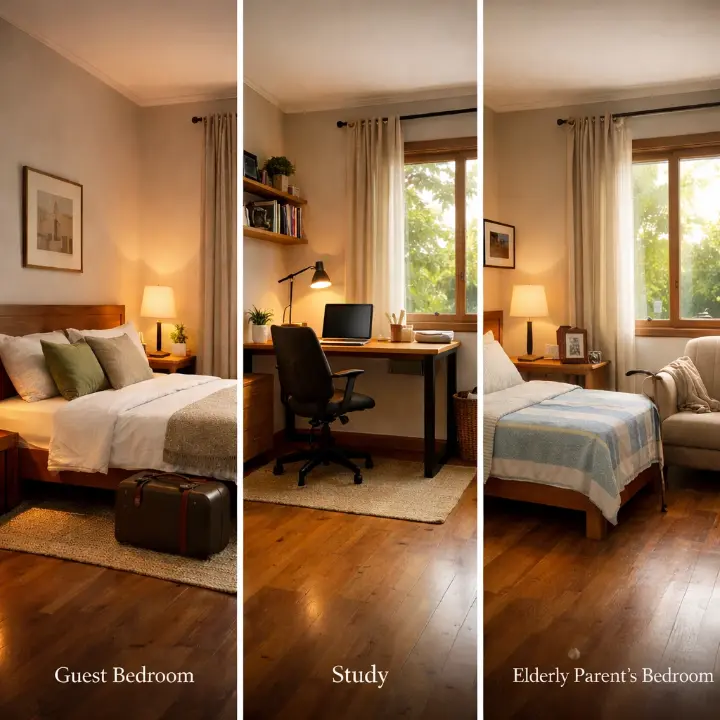
1. One Room, Many Lives
Earlier thinking:
“This is a guest room.”
Today’s thinking:
“This room may be a guest room now, a parent’s room later, and a study in between.”
Architects design rooms with:
- Neutral proportions
- Flexible openings
- Easy furniture rearrangement
This allows the same room to serve different purposes over time.
2. Living Rooms That Do More Than Entertain Guests
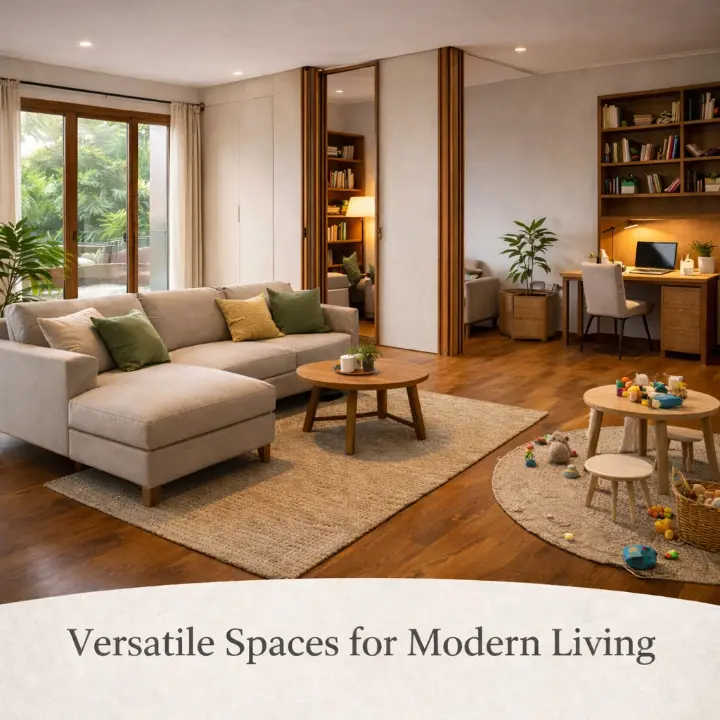
Traditional living rooms were designed mainly for visitors.
Today, living spaces support:
- Family gatherings
- Work-from-home
- Children’s activities
- Quiet personal time
Architects now design:
- Living spaces with zones
- Corners that can be separated visually
- Furniture-friendly layouts
This makes the living room adaptable without walls.
3. Flexible Layout Planning From Day One
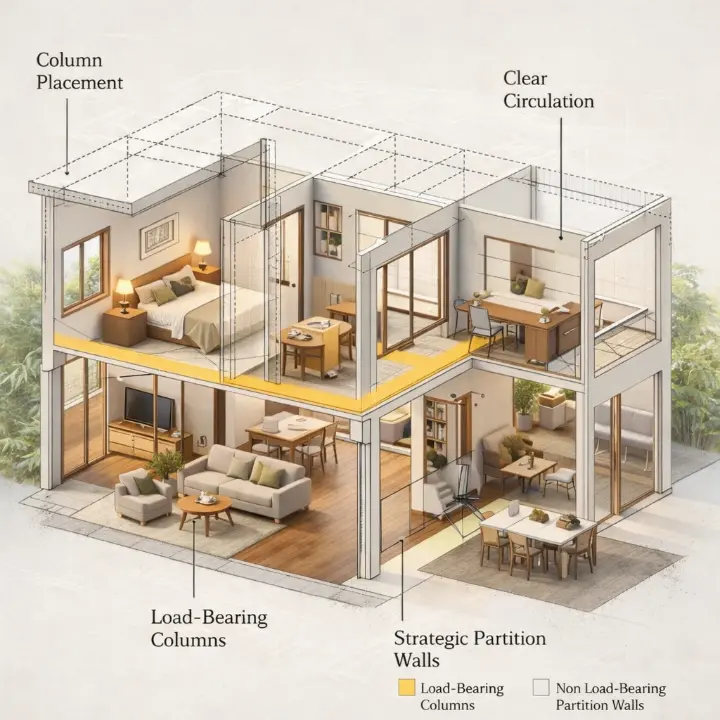
Flexibility is not about breaking walls later.
It is about:
- Structural grid planning
- Column placement
- Non-load-bearing partitions
- Clear circulation paths
Good planning allows walls to be added or removed without damage.
Rigid Planning vs Flexible Planning

Aspect | Rigid Home Design | Flexible Home Design |
Walls | Load-bearing everywhere | Strategic partition walls |
Circulation | Fixed and narrow | Clear and adaptable |
Room sizes | Highly specific | Neutral proportions |
Future changes | Difficult | Simple |
4. Designing for Different Life Stages
A home may serve:
- A young couple today
- A family with children tomorrow
- Elderly parents later
Architects plan flexibility by:
- Locating a bedroom on the ground floor
- Ensuring easy circulation
- Allowing rooms to shift purpose
This avoids expensive renovations later.
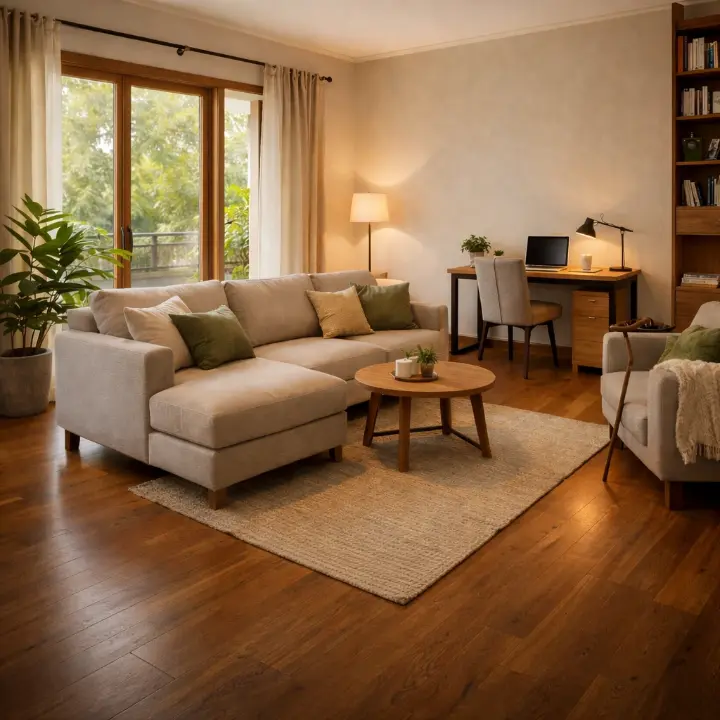
5. Work-From-Home Changed Everything
Before:
- Work happened outside
Now:
- Work happens inside homes
Architects now design:
- Spaces that can quietly become work zones
- Rooms with good light and ventilation
- Separation between work and rest areas
A flexible home allows workspaces to disappear after work hours.
6. Furniture as Part of Architectural Flexibility
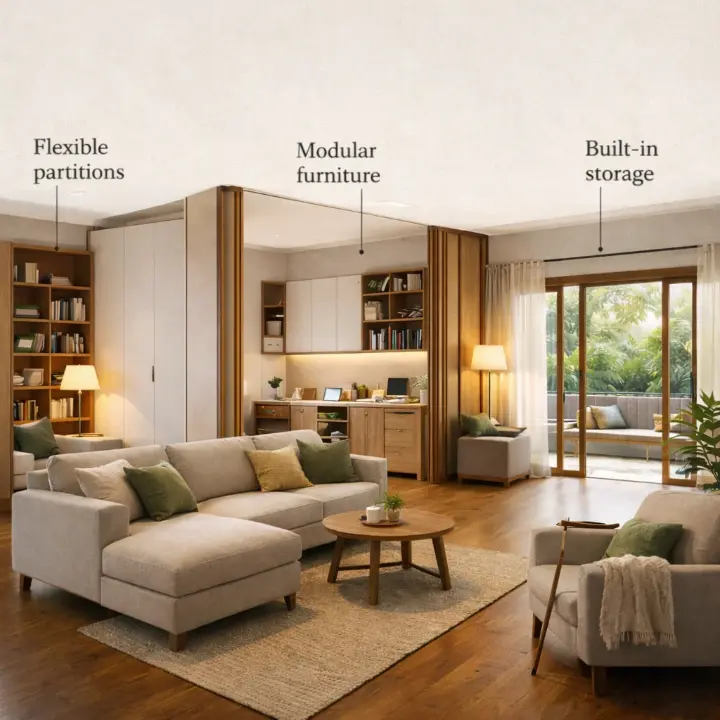
Furniture is no longer an afterthought.
Architects now design:
- Built-in storage
- Foldable elements
- Multi-use furniture zones
This allows spaces to transform without reconstruction.
Fixed Furniture vs Flexible Furniture Planning

Furniture Approach | Result |
Heavy fixed furniture | Limits change |
Modular furniture | Allows adaptation |
Built-in storage | Reduces clutter |
Moveable partitions | Supports re-use |
7. Transitional Spaces Enable Change
Spaces like:
- Verandahs
- Family lounges
- Corridors
- Courtyard edges
These act as buffers that allow rooms to change function smoothly.
They prevent disruption when layouts evolve.
8. Avoiding Over-Specialized Rooms
Highly specialised rooms age badly.
Examples:
- Oversized formal living rooms
- Themed rooms
- Fixed entertainment units
Flexible homes avoid over-designing any single function.
Over-Specialized vs Adaptable Rooms
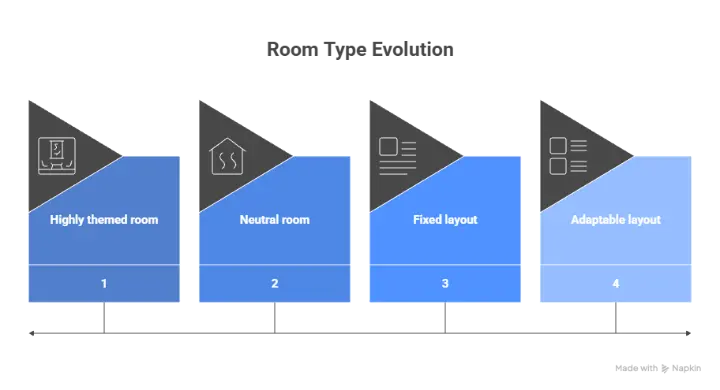
Room Type | Long-Term Outcome |
Highly themed room | Becomes outdated |
Neutral room | Easily reused |
Fixed layout | Restrictive |
Adaptable layout | Long-lasting |
9. Structural Decisions That Enable Change
Flexibility is deeply linked to structure.
Architects carefully plan:
- Column spacing
- Beam direction
- Slab thickness
These decisions allow:
- Future partition changes
- Easy service rerouting
- Vertical expansion planning
This is where architecture differs from basic construction.
10. Flexibility Reduces Renovation Stress
Homes that are not flexible require:
- Breaking walls
- Structural changes
- Dust, noise, cost
Flexible homes:
- Adjust with minimal effort
- Save money long-term
- Reduce emotional stress
This is why many people searching for the best architects in Kerala now prioritise adaptability.
Common Mistakes That Kill Flexibility
Flexibility is lost due to:
- Over-designing early
- Ignoring future needs
- Rigid furniture planning
- Copy-paste floor plans
Once built, flexibility cannot be easily added.
Design Mistakes vs Flexible Thinking
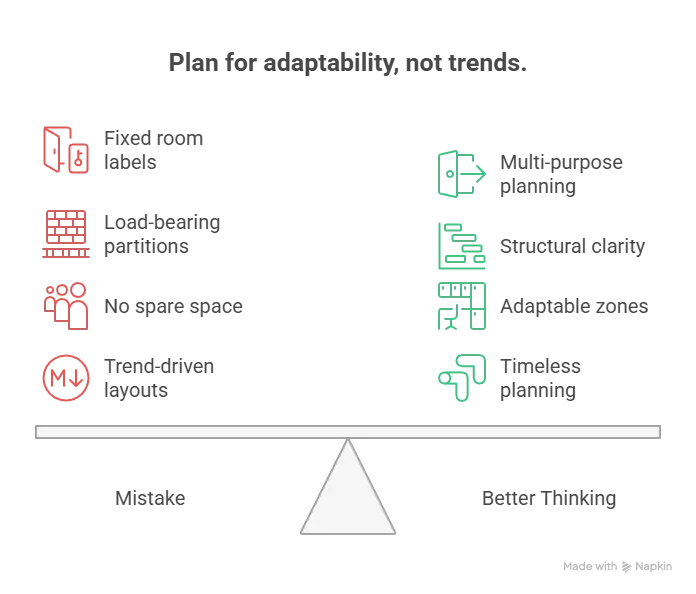
Mistake | Result | Better Thinking |
Fixed room labels | Limits use | Multi-purpose planning |
Load-bearing partitions | No change possible | Structural clarity |
No spare space | Stress later | Adaptable zones |
Trend-driven layouts | Short lifespan | Timeless planning |
Why Flexible Homes Age Better
Flexible homes:
- Stay relevant longer
- Support changing lifestyles
- Reduce renovation costs
- Feel less restrictive
They grow with the family instead of resisting change.
Flexibility Is Not Visible — But Deeply Valuable
Flexible design rarely looks dramatic in photos.
But it is felt when:
- Life changes
- Needs shift
- Unexpected situations arise
This is why thoughtful architectural firms like R+A Architects focus on long-term usability, not short-term visual impact.
Flexibility as an Architectural Responsibility
Architecture is not just about solving today’s needs.
It is about preparing for tomorrow—without knowing exactly what tomorrow will be.
Flexible homes respect:
- Uncertainty
- Human change
- Life’s unpredictability
Homes That Change Are Homes That Last
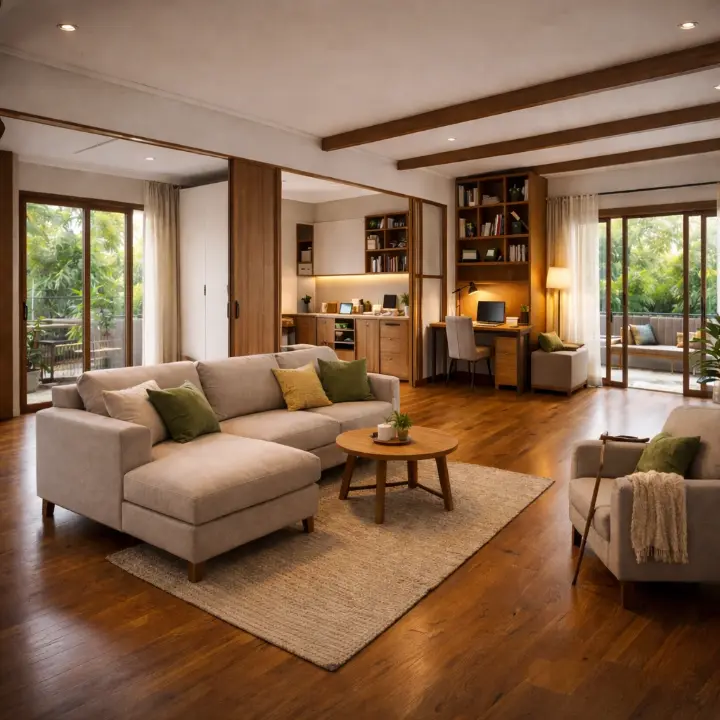
In 2026, the best homes are not the most fixed.
They are:
- Adaptable
- Thoughtfully planned
- Emotionally supportive
- Structurally intelligent
Homes designed to change remain relevant, comfortable, and meaningful for decades.
This approach defines the work of experienced architects in Kerala, who understand that a home is not a finished product—but a living environment.
About the Author
Mohammed Rashid
Founder & Principal Architect, R+A Architects
Mohammed Rashid, Founder & Principal Architect at R+A Architects, holds a B.Arch from Anna University. With 60+ projects across India, Dubai, and Europe, and awards including India Design 2023 and Stellar Design 2024, he champions modern Kerala architecture rooted in climate, comfort, and culture.
in Architecture
Related Reading
- Architectural Services in Perinthalmanna, Kerala
- Architecture & Design Insights for Kerala Homes & Businesses
Explore next:
- How a Good Architect Can Simplify the Complexities of Building Permits
- Kerala Coastal Zone Management Authority.
- Build Your Luxury NRI Villa in Kerala with Complete Design + PMC Support